


- Afhalen na 1 uur in een winkel met voorraad
- Gratis thuislevering in België vanaf € 30
- Ruim aanbod met 7 miljoen producten
- Afhalen na 1 uur in een winkel met voorraad
- Gratis thuislevering in België vanaf € 30
- Ruim aanbod met 7 miljoen producten




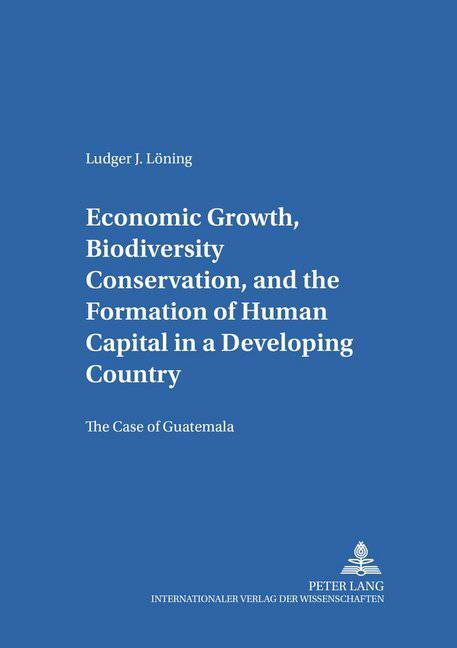
Economic Growth, Biodiversity Conservation, and the Formation of Human Capital in a Developing Country
The Case of Guatemala
Ludger Löning
€ 69,45
+ 138 punten
Omschrijving
Can education play a role in fostering economic growth and simultaneously decrease pressure on forests? The aim of this study is to show that it can. Human capital formation is a key element in a development strategy that includes natural resource conservation within the framework of sustained economic growth and poverty alleviation. Consequently, it is not by chance that Guatemala is experiencing both minimal per capital income growth and high deforestation while having one of the lowest educational levels in Latin America. However, since many assumptions about educational benefits are controversial and many aspects depend on broader issues, human capital formation can only be one piece in a multidimensional puzzle. This study is organized into three parts, each one of which can be read independently: first, a macroeconomic assessment of education and other factors involved in the country's growth trajectory; second, a rural analysis indicating the root causes of deforestation and the role education can play to slow down habitat loss; third, the highlighting of some elements indispensable to reform and to subsequent improvement of the quality of rural schooling.
Specificaties
Betrokkenen
- Auteur(s):
- Uitgeverij:
Inhoud
- Aantal bladzijden:
- 248
- Taal:
- Engels
- Reeks:
- Reeksnummer:
- nr. 13
Eigenschappen
- Productcode (EAN):
- 9783631526071
- Verschijningsdatum:
- 29/06/2004
- Uitvoering:
- Paperback
- Formaat:
- Trade paperback (VS)
- Afmetingen:
- 157 mm x 229 mm
- Gewicht:
- 385 g


Alleen bij Standaard Boekhandel
+ 138 punten op je klantenkaart van Standaard Boekhandel
AANGERADEN


Beoordelingen
We publiceren alleen reviews die voldoen aan de voorwaarden voor reviews. Bekijk onze voorwaarden voor reviews.