


- Afhalen na 1 uur in een winkel met voorraad
- Gratis thuislevering in België vanaf € 30
- Ruim aanbod met 7 miljoen producten
- Afhalen na 1 uur in een winkel met voorraad
- Gratis thuislevering in België vanaf € 30
- Ruim aanbod met 7 miljoen producten





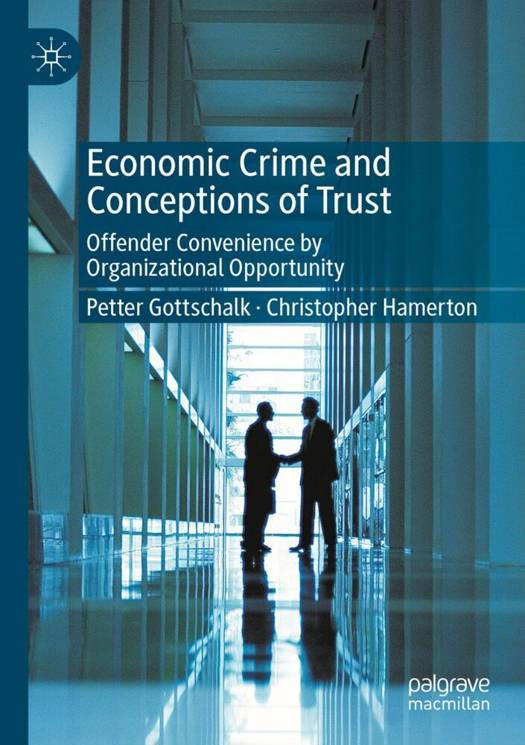
Economic Crime and Conceptions of Trust
Offender Convenience by Organizational Opportunity
Petter Gottschalk, Christopher Hamerton
Paperback | Engels
€ 140,95
+ 281 punten
Eenvoudig bestellen
Veilig betalen


Gratis thuislevering vanaf € 30 (via bpost)
Gratis levering in je Standaard Boekhandel
Omschrijving
Economic Crime and Conceptions of Trust explores the intricacies of the contemporary concept of trust in episodes of misconduct through an analysis of workplace deviance and crime. Grounded in detailed examinations of contemporary case studies and bolstered by original comparative fieldwork, the text takes an offender-focused approach, emphasizing the pivotal role of convenience. Adopting an interdisciplinary perspective, the authors seek to enhance and broaden existing understanding of white-collar and corporate criminology, while also highlighting its relevance to strategic management studies. A core argument of the book is that the traditional emphasis on individual actors and notions of trustworthiness when conceptualising white-collar has waned in recent times. The authors' perspective revisits and builds upon this important foundational concept of late twentieth-century discourse within the discipline, signalling a need for a reassessment and highlighting a number of recent conceptual developments to evaluate and position trust within the twenty-first century globalized business sphere.
Specificaties
Betrokkenen
- Auteur(s):
- Uitgeverij:
Inhoud
- Taal:
- Engels
Eigenschappen
- Productcode (EAN):
- 9783031823176
- Uitvoering:
- Paperback
- Afmetingen:
- 148 mm x 17 mm
- Gewicht:
- 431 g



Alleen bij Standaard Boekhandel
+ 281 punten op je klantenkaart van Standaard Boekhandel
CADEAU

AANGERADEN


Beoordelingen
We publiceren alleen reviews die voldoen aan de voorwaarden voor reviews. Bekijk onze voorwaarden voor reviews.