


- Afhalen na 1 uur in een winkel met voorraad
- Gratis thuislevering in België vanaf € 30
- Ruim aanbod met 7 miljoen producten
- Afhalen na 1 uur in een winkel met voorraad
- Gratis thuislevering in België vanaf € 30
- Ruim aanbod met 7 miljoen producten





Omschrijving
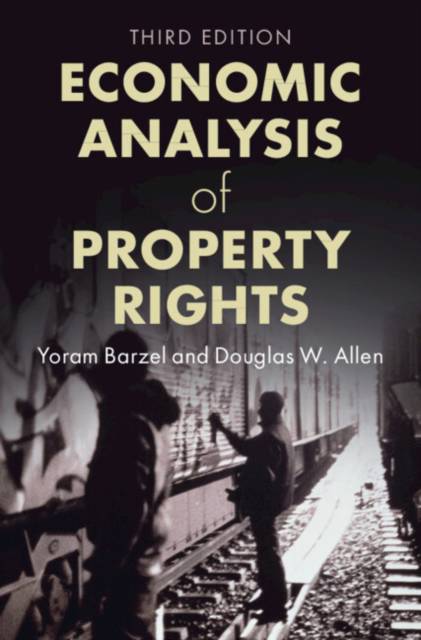
The standard neoclassical model of economics is incapable of explaining why one form of organization arises over another. It is a model where transaction costs are implicitly assumed to not exist; however, transaction costs are here defined as the costs of strengthening a given distribution of economic property rights, and they always exist. Economic Analysis of Property Rights is a study of how individuals organise resources to maximise the value of their economic rights over these resources. It offers a unified theoretical structure to deal with exchange, rights formation, and organisation that traditional economic theory often ignores. It explains how transaction costs can be reduced through reorganization and, in the end, how the distribution of property rights that exists is the one that maximizes wealth net of these transaction costs. This necessary hypothesis explains much of the puzzling organizations and institutions that exist now and have existed in the past.
Specificaties
Betrokkenen
- Auteur(s):
- Uitgeverij:
Inhoud
- Aantal bladzijden:
- 300
- Taal:
- Engels
- Reeks:
Eigenschappen
- Productcode (EAN):
- 9781009374729
- Verschijningsdatum:
- 31/08/2023
- Uitvoering:
- Paperback
- Formaat:
- Trade paperback (VS)
- Afmetingen:
- 152 mm x 229 mm
- Gewicht:
- 403 g


Alleen bij Standaard Boekhandel
+ 89 punten op je klantenkaart van Standaard Boekhandel
CADEAU

AANGERADEN


Beoordelingen
We publiceren alleen reviews die voldoen aan de voorwaarden voor reviews. Bekijk onze voorwaarden voor reviews.