


- Afhalen na 1 uur in een winkel met voorraad
- Gratis thuislevering in België vanaf € 30
- Ruim aanbod met 7 miljoen producten
- Afhalen na 1 uur in een winkel met voorraad
- Gratis thuislevering in België vanaf € 30
- Ruim aanbod met 7 miljoen producten





€ 17,34
+ 17 punten
Uitvoering
Eenvoudig bestellen
Veilig betalen


Onmiddellijk geleverd via e-mail
Omschrijving
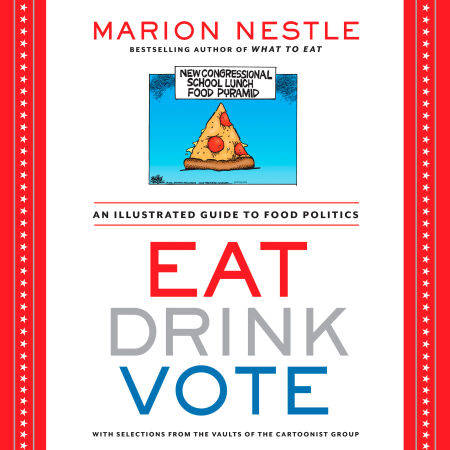
What's wrong with the US food system? Why is half the world starving while the other half battles obesity? Who decides our food issues, and why can't we do better with labeling, safety, or school food? These are complex questions that are hard to answer in an engaging way for a broad audience. But everybody eats, and food politics affects us all.
Marion Nestle, whom Michael Pollan ranked as the #2 most powerful foodie in America (after Michelle Obama) in Forbes, has always used cartoons in her public presentations to communicate how politics—shaped by government, corporate marketing, economics, and geography—influences food choice. Cartoons do more than entertain; the best get right to the core of complicated concepts and powerfully convey what might otherwise take pages to explain.
In Eat Drink Vote, Nestle teams up with The Cartoonist Group syndicate to present more than 250 of her favorite cartoons on issues ranging from dietary advice to genetic engineering to childhood obesity. Using the cartoons as illustration and commentary, she engagingly summarizes some of today's most pressing issues in food politics. While encouraging readers to vote with their forks for healthier diets, this book insists that it's also necessary to vote with votes to make it easier for everyone to make healthier dietary choices.
Marion Nestle, whom Michael Pollan ranked as the #2 most powerful foodie in America (after Michelle Obama) in Forbes, has always used cartoons in her public presentations to communicate how politics—shaped by government, corporate marketing, economics, and geography—influences food choice. Cartoons do more than entertain; the best get right to the core of complicated concepts and powerfully convey what might otherwise take pages to explain.
In Eat Drink Vote, Nestle teams up with The Cartoonist Group syndicate to present more than 250 of her favorite cartoons on issues ranging from dietary advice to genetic engineering to childhood obesity. Using the cartoons as illustration and commentary, she engagingly summarizes some of today's most pressing issues in food politics. While encouraging readers to vote with their forks for healthier diets, this book insists that it's also necessary to vote with votes to make it easier for everyone to make healthier dietary choices.
Specificaties
Betrokkenen
- Auteur(s):
- Uitgeverij:
Inhoud
- Aantal bladzijden:
- 224
- Taal:
- Engels
Eigenschappen
- Productcode (EAN):
- 9781609615871
- Verschijningsdatum:
- 2/09/2013
- Uitvoering:
- E-book
- Beveiligd met:
- Adobe DRM
- Formaat:
- ePub


Alleen bij Standaard Boekhandel
+ 17 punten op je klantenkaart van Standaard Boekhandel
CADEAU

AANGERADEN


Beoordelingen
We publiceren alleen reviews die voldoen aan de voorwaarden voor reviews. Bekijk onze voorwaarden voor reviews.