


- Afhalen na 1 uur in een winkel met voorraad
- Gratis thuislevering in België vanaf € 30
- Ruim aanbod met 7 miljoen producten
- Afhalen na 1 uur in een winkel met voorraad
- Gratis thuislevering in België vanaf € 30
- Ruim aanbod met 7 miljoen producten





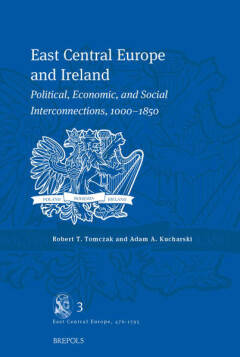
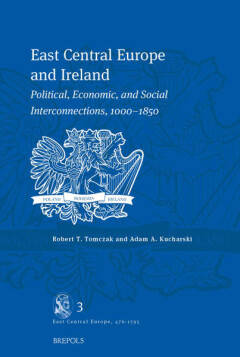
East Central Europe and Ireland
Political, Economic, and Social Interconnections, 1000-1850
Robert Tomczak
€ 79,50
+ 159 punten
Omschrijving
This book explores the broad scope of political, economic, and social aspects of relations between Central Europe (focused on Poland and the lands of the Czechs) and Ireland. Taking a longitudinal approach, this study charts the interaction between the western and the central-eastern peripheries of Europe from the Middle Ages to the period after the Third Partition of Poland-Lithuania in 1795. The authors examine how the relationship between the geographically opposite ends of Europe evolved. Shaped by the shifts of 'political tectonic plates' they argue that the evolution can be described in general terms: from a largely unidirectional to an interconnected chain of events. This book demonstrates similarities and analyses differences in a complex, yet unexplored, past of the three emergent nations; nations which in the public perception were overshadowed by their mighty neighbours for far too long.
Specificaties
Betrokkenen
- Auteur(s):
- Uitgeverij:
Inhoud
- Aantal bladzijden:
- 203
- Taal:
- Engels
- Reeks:
- Reeksnummer:
- nr. 3
Eigenschappen
- Productcode (EAN):
- 9782503604329
- Verschijningsdatum:
- 1/03/2024
- Uitvoering:
- Hardcover
- Formaat:
- Genaaid
- Gewicht:
- 353 g


Alleen bij Standaard Boekhandel
+ 159 punten op je klantenkaart van Standaard Boekhandel
Cadeau

AANGERADEN


Beoordelingen
We publiceren alleen reviews die voldoen aan de voorwaarden voor reviews. Bekijk onze voorwaarden voor reviews.