Standaard Boekhandel gebruikt cookies en gelijkaardige technologieën om de website goed te laten werken en je een betere surfervaring te bezorgen.
Hieronder kan je kiezen welke cookies je wilt inschakelen:
Technische en functionele cookies
Deze cookies zijn essentieel om de website goed te laten functioneren, en laten je toe om bijvoorbeeld in te loggen. Je kan deze cookies niet uitschakelen.
Analytische cookies
Deze cookies verzamelen anonieme informatie over het gebruik van onze website. Op die manier kunnen we de website beter afstemmen op de behoeften van de gebruikers.
Marketingcookies
Deze cookies delen je gedrag op onze website met externe partijen, zodat je op externe platformen relevantere advertenties van Standaard Boekhandel te zien krijgt.
Bedankt voor het vertrouwen het afgelopen jaar! Om jou te bedanken bieden we GRATIS verzending (in België) aan op alles gedurende de hele maand januari.
Afhalen na 1 uur in een winkel met voorraad
In januari gratis thuislevering in België
Ruim aanbod met 7 miljoen producten
Bedankt voor het vertrouwen het afgelopen jaar! Om jou te bedanken bieden we GRATIS verzending (in België) aan op alles gedurende de hele maand januari.
Je kan maximaal 250 producten tegelijk aan je winkelmandje toevoegen. Verwijdere enkele producten uit je winkelmandje, of splits je bestelling op in meerdere bestellingen.
In januari gratis thuislevering in België (via bpost)
Gratis levering in je Standaard Boekhandel
Omschrijving
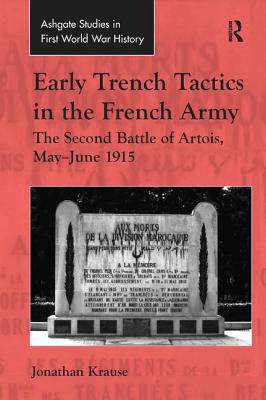
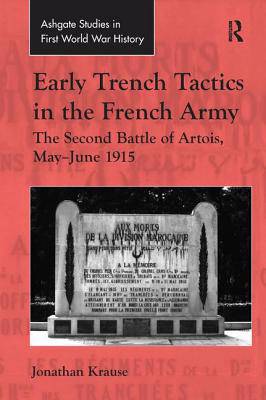
In the English-speaking world the First World War is all too often portrayed primarily as a conflict between Britain and Germany. The vast majority of books focus on the Anglo-German struggle, and ignore the dominant part played by the French, who for most of the war provided the bulk of the soldiers fighting against the central powers. As such, this important and timely book joins the small but growing collection of works offering an overdue assessment of the French contribution to the Great War. Drawing heavily on French primary sources the book has two main foci: it is both an in-depth battle narrative and analysis, as well as a work on the tactical evolution of the French army in Spring 1915 as it endeavored aggressively to come to grips with trench warfare. This period is of crucial importance as it was in these months that the French army learned the foundations of trench warfare on which their conduct for the remainder of the war would rest. The work argues that many advanced practices often considered German innovations - such as the rolling barrage, infiltration tactics, and the effective planning and integration of artillery bombardments - can all be traced back to French writing and action in early 1915. The work argues that - contrary to received opinion - French army bureaucracy proved effective at very quickly taking in, digesting and then disseminating lessons learned at the front and French commanders proved to be both effective and professional. Such radical conclusions demand a fundamental rethink of the way we view operations on the Western Front.