



Je cadeautjes zeker op tijd in huis hebben voor de feestdagen? Kom langs in onze winkels en vind het perfecte geschenk!
- Afhalen na 1 uur in een winkel met voorraad
- Gratis thuislevering in België vanaf € 30
- Ruim aanbod met 7 miljoen producten
Je cadeautjes zeker op tijd in huis hebben voor de feestdagen? Kom langs in onze winkels en vind het perfecte geschenk!
- Afhalen na 1 uur in een winkel met voorraad
- Gratis thuislevering in België vanaf € 30
- Ruim aanbod met 7 miljoen producten





Omschrijving
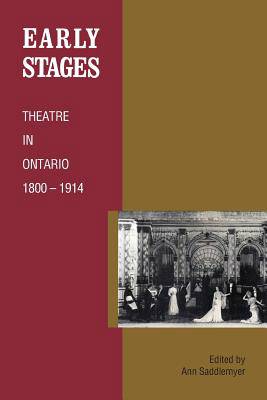
A circus, a production of Shakespeare, an evening of song and ventriloquism, a performance by a 'learned pig' - all of these offered an evening's entertainment to the citizens of early nineteenth-century Upper Canada. Although the population in 1800 was only 90,000, a wide range of entertainers performed in towns across the province: touring companies, variety and animal acts, and theatrical troupes, professional and amateur, some home-grown and based in the garrisons, others from Montreal, New York, and London. By the end of the century, some 250 touring groups were on the road across Ontario, from Ottawa to Rat Portage (now Kenora). The lively theatre tradition of that century would extend into the next, beyond the appointment in 1913 of Ontario's first official censor, until the outbreak the following year of the First World War.
This collection of essays covers a number of facets of the growth of theatre in Ontario. Ann Saddlemyer's introduction provides an overview of the period, and historian J.M.S. Careless focuses on the cultural environment. Novelist Robertson Davies writes on the dramatic repertoire of the period. Architect Robert Fairfield explores the structures that housed performances, from the small community halls to the grand opera houses. Theatre scholar and professional actor and director Geralrd Lenton-Young discusses variety performances. Leslie O'Dell, scholar, actor, and playwright, writes on garrison theatre, while Mary M. Brown, a teacher, actress, and director, covers travelling troupes. A chronology and bibliography, both by the theatre scholar Richard Plant, complete the work.
A second volume, scheduled for future publication, will look at the development of theatre in Ontario in the twentieth century.
(Ontario Historical Studies Series)
This collection of essays covers a number of facets of the growth of theatre in Ontario. Ann Saddlemyer's introduction provides an overview of the period, and historian J.M.S. Careless focuses on the cultural environment. Novelist Robertson Davies writes on the dramatic repertoire of the period. Architect Robert Fairfield explores the structures that housed performances, from the small community halls to the grand opera houses. Theatre scholar and professional actor and director Geralrd Lenton-Young discusses variety performances. Leslie O'Dell, scholar, actor, and playwright, writes on garrison theatre, while Mary M. Brown, a teacher, actress, and director, covers travelling troupes. A chronology and bibliography, both by the theatre scholar Richard Plant, complete the work.
A second volume, scheduled for future publication, will look at the development of theatre in Ontario in the twentieth century.
(Ontario Historical Studies Series)
Specificaties
Betrokkenen
- Uitgeverij:
Inhoud
- Aantal bladzijden:
- 412
- Taal:
- Engels
- Reeks:
Eigenschappen
- Productcode (EAN):
- 9780802067791
- Verschijningsdatum:
- 1/12/1990
- Uitvoering:
- Paperback
- Formaat:
- Trade paperback (VS)
- Afmetingen:
- 152 mm x 229 mm
- Gewicht:
- 625 g

Alleen bij Standaard Boekhandel
+ 131 punten op je klantenkaart van Standaard Boekhandel
CADEAU


Beoordelingen
We publiceren alleen reviews die voldoen aan de voorwaarden voor reviews. Bekijk onze voorwaarden voor reviews.