


- Afhalen na 1 uur in een winkel met voorraad
- Gratis thuislevering in België vanaf € 30
- Ruim aanbod met 7 miljoen producten
- Afhalen na 1 uur in een winkel met voorraad
- Gratis thuislevering in België vanaf € 30
- Ruim aanbod met 7 miljoen producten





€ 36,45
+ 72 punten
Omschrijving
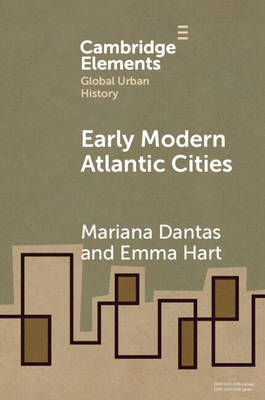
The Atlantic World was an oceanic system circulating goods, people, and ideas that emerged in the late fifteenth and early sixteenth century. European imperialism was its motor, while its character derived from the interactions between peoples indigenous to Europe, the Americas, and Africa. Much of the everyday workings of this oceanic system took place in urban settings. By sustaining the connections between these disparate regions, cities and towns became essential to the transformations that occurred in this early modern era. This Element, traces the emergence of the Atlantic city as a site of contact, an agent of colonization, a central node in networks of exchange, and an arena of political contestation. Cities of the Atlantic World operated at the juncture of many of the core processes in a global history of capitalism and of rising social and racial inequality. A source of analogous experiences of division as well as unity, they helped shape the Atlantic world as a coherent geography of analysis.
Specificaties
Betrokkenen
- Auteur(s):
- Uitgeverij:
Inhoud
- Aantal bladzijden:
- 104
- Taal:
- Engels
- Reeks:
Eigenschappen
- Productcode (EAN):
- 9781108749541
- Verschijningsdatum:
- 25/04/2024
- Uitvoering:
- Paperback
- Formaat:
- Trade paperback (VS)
- Afmetingen:
- 152 mm x 229 mm
- Gewicht:
- 149 g


Alleen bij Standaard Boekhandel
+ 72 punten op je klantenkaart van Standaard Boekhandel
Cadeau

AANGERADEN


Beoordelingen
We publiceren alleen reviews die voldoen aan de voorwaarden voor reviews. Bekijk onze voorwaarden voor reviews.