


- Afhalen na 1 uur in een winkel met voorraad
- Gratis thuislevering in België vanaf € 30
- Ruim aanbod met 7 miljoen producten
- Afhalen na 1 uur in een winkel met voorraad
- Gratis thuislevering in België vanaf € 30
- Ruim aanbod met 7 miljoen producten





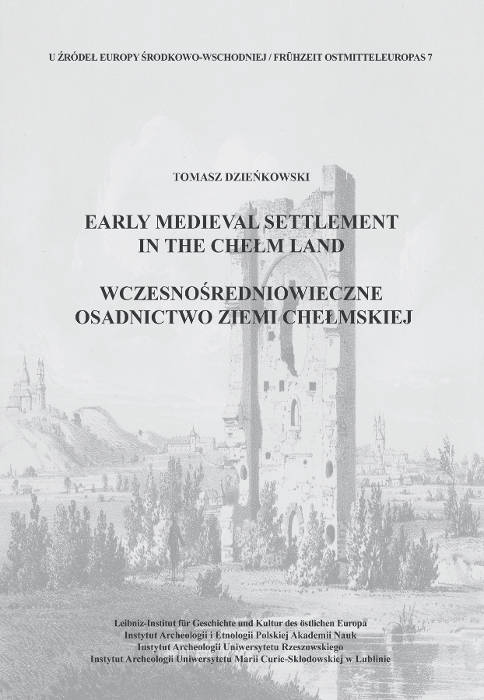
Early Medieval Settlement in the Chelm Land
Wczesnosredniowieczne osadnictwo ziemi chelmskiej
Tomasz Dzienkowski
€ 34,95
+ 69 punten
Omschrijving
The present book - prepared in co-operation with the Maria Curie-Sklodowska University Institute of Archaeology, Lublin - contains an analysis of settlement in the Chelm Land during the Middle Age (6th-13th century) in the portion of this historical province now found within the borders of Poland.The evidence presented in the book was excavated on open settlements, hill-forts and cemeteries (cremation and inhumation).An extensive discussion is made of the remains of stone architecture in Chelm (royal residence of Daniel Romanovich).All the absolute dates secured in the Chelm Land now available and relevant to the subject are presented, as well as data crucial for the reconstruction of the relationship between humans and the natural environment. Past archaeological studies in the region are outlined at length, the earliest of them made in the city of Chelm around the middle of the 17th century.The present work is a valuable contribution to Cherven' Towns studies pursued within a Polish-German co-operation and to the study of the medieval Polish-Rus' borderland.This text is an updated version of a doctoral thesis written by Tomasz Dzienkowski under supervision of Professor Andrzej Buko and defendet at the Institute of Achaeology and Ethnology of the Polish Academy of Sciences in 2011.
Specificaties
Betrokkenen
- Auteur(s):
- Uitgeverij:
Inhoud
- Taal:
- Engels, Pools
- Reeks:
- Reeksnummer:
- nr. 7
Eigenschappen
- Productcode (EAN):
- 9783960234371
- Uitvoering:
- Hardcover
- Afmetingen:
- 215 mm x 305 mm
- Gewicht:
- 2356 g


Alleen bij Standaard Boekhandel
+ 69 punten op je klantenkaart van Standaard Boekhandel
Cadeau

AANGERADEN


Beoordelingen
We publiceren alleen reviews die voldoen aan de voorwaarden voor reviews. Bekijk onze voorwaarden voor reviews.