


- Afhalen na 1 uur in een winkel met voorraad
- Gratis thuislevering in België vanaf € 30
- Ruim aanbod met 7 miljoen producten
- Afhalen na 1 uur in een winkel met voorraad
- Gratis thuislevering in België vanaf € 30
- Ruim aanbod met 7 miljoen producten





€ 21,95
+ 43 punten
Omschrijving
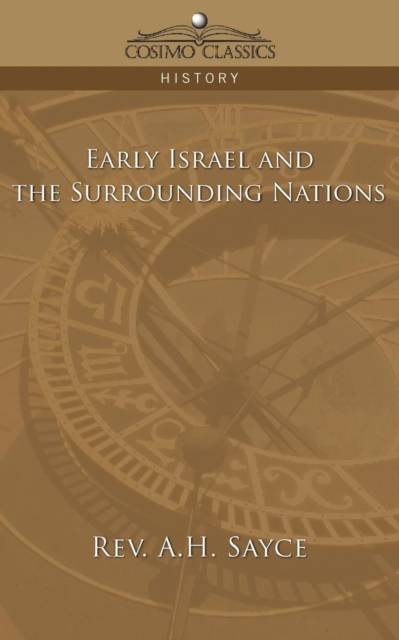
[A] new people appeared on the scene, bringing with them the elements of a high culture and a knowledge of working in metals. These were the Pharaonic Egyptians, who seem to have come from Babylonia and the coasts of southern Arabia. Cities were built and kingdoms were founded on the banks of the Nile, and the Early Israel and the surrounding .population was forced to become the serfs of the new-comers, to cultivate their fields, to confine the Nile within artificial boundaries, and to carry out those engineering works which have made the valley of the Nile what it is to-day. -from "Chapter V: Egypt" A.H. Sayce was one of the most controversial figures in the field of biblical archaeology at the turn of the 20th century, a popularizer of ancient history who sought to prove the veracity of the Bible as an historical document. This 1899 work leaves no doubt as to why he enjoyed such success with the public: this is a compulsively readable work, yet one of formidable scholarship as well. A brisk study of the legendary places of the Bible-and of the dawn of human civilization-Early Israel and the Surrounding Nations briefly explores the landscapes and the cultures of Israel, Canaan, Egypt, Assyria, Babylon, Arabia, Syria, Asia Minor with wit and panache. It remains an excellent foundation for appreciating the Biblical as history and as literature. Also available from Cosimo Classics: Sayce's The Hibbert Lectures, 1887: Lectures on the Origin and Growth of Religion as Illustrated by the Religion of the Ancient Babylonians British classical scholar ARCHIBALD HENRY SAYCE (1845-1933), a fellow and lecturer in Assyriology at Oxford, is best known for his book The History of Hebrews and his deciphering of the Hittite language. An expert in Ancient Near Eastern civilization and culture, he also authored Assyria: Its Princes, Priests and People and The Races of the Old Testament.
Specificaties
Betrokkenen
- Auteur(s):
- Uitgeverij:
Inhoud
- Aantal bladzijden:
- 340
- Taal:
- Engels
Eigenschappen
- Productcode (EAN):
- 9781596054028
- Verschijningsdatum:
- 01/12/2005
- Uitvoering:
- Paperback
- Formaat:
- Trade paperback (VS)
- Afmetingen:
- 127 mm x 203 mm
- Gewicht:
- 367 g


Alleen bij Standaard Boekhandel
+ 43 punten op je klantenkaart van Standaard Boekhandel
Cadeau

AANGERADEN


Beoordelingen
We publiceren alleen reviews die voldoen aan de voorwaarden voor reviews. Bekijk onze voorwaarden voor reviews.