


- Afhalen na 1 uur in een winkel met voorraad
- Gratis thuislevering in België vanaf € 30
- Ruim aanbod met 7 miljoen producten
- Afhalen na 1 uur in een winkel met voorraad
- Gratis thuislevering in België vanaf € 30
- Ruim aanbod met 7 miljoen producten





€ 67,95
+ 135 punten
Omschrijving
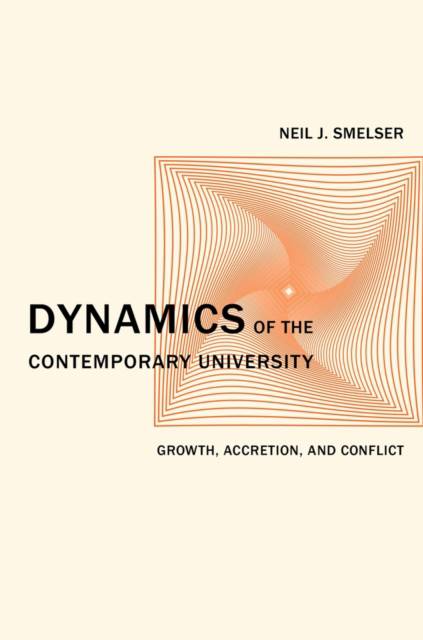
This book is an expanded version of the Clark Kerr Lectures of 2012, delivered by Neil Smelser at the University of California at Berkeley in January and February of that year. The initial exposition is of a theory of change--labeled structural accretion--that has characterized the history of American higher education, mainly (but not exclusively) of universities. The essence of the theory is that institutions of higher education progressively add functions, structures, and constituencies as they grow, but seldom shed them, yielding increasingly complex structures. The first two lectures trace the multiple ramifications of this principle into other arenas, including the essence of complexity in the academic setting, the solidification of academic disciplines and departments, changes in faculty roles and the academic community, the growth of political constituencies, academic administration and governance, and academic stratification by prestige. In closing, Smelser analyzes a number of contemporary trends and problems that are superimposed on the already-complex structures of higher education, such as the diminishing public support without alterations of governance and accountability, the increasing pattern of commercialization in higher education, the growth of distance-learning and for-profit institutions, and the spectacular growth of temporary and part-time faculty.
Specificaties
Betrokkenen
- Auteur(s):
- Uitgeverij:
Inhoud
- Aantal bladzijden:
- 152
- Taal:
- Engels
- Reeks:
- Reeksnummer:
- nr. 3
Eigenschappen
- Productcode (EAN):
- 9780520275812
- Verschijningsdatum:
- 15/03/2013
- Uitvoering:
- Hardcover
- Formaat:
- Genaaid
- Afmetingen:
- 157 mm x 231 mm
- Gewicht:
- 340 g


Alleen bij Standaard Boekhandel
+ 135 punten op je klantenkaart van Standaard Boekhandel
Cadeau

AANGERADEN


Beoordelingen
We publiceren alleen reviews die voldoen aan de voorwaarden voor reviews. Bekijk onze voorwaarden voor reviews.