



- Afhalen na 1 uur in een winkel met voorraad
- In januari gratis thuislevering in België
- Ruim aanbod met 7 miljoen producten
- Afhalen na 1 uur in een winkel met voorraad
- In januari gratis thuislevering in België
- Ruim aanbod met 7 miljoen producten





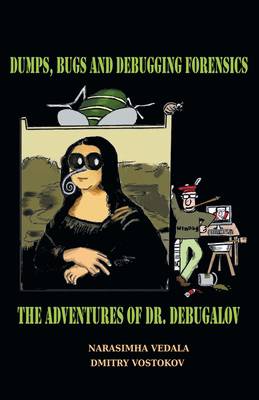
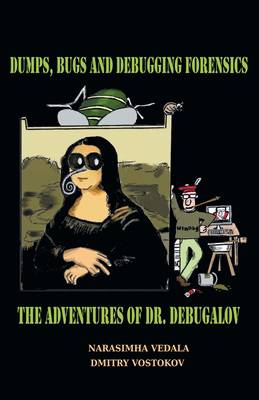
Dumps, Bugs, and Debugging Forensics
The Adventures of Dr. Debugalov
Narasimha Vedala
Paperback | Engels
€ 27,45
+ 54 punten
Omschrijving
This is a revised ultra-premium color reprint of the original 2008 edition with minor corrections. From the book preface: Behold! Thou art holding the divine book on bugs and debugging. If you are staring at this preface in a bookshop, ask not what it is; just buy it, go home, and savor each page. The explanation might further cause severe brain concussions, especially if you are not programming savvy and have never before thought that bugs don't just occur in nature, but they copulate and live in computers, too. I'm not talking about cockroaches nesting in your computer, but about programming and hardware bugs. If you think you can withstand brain damage and not babble for the rest of your life, read on. We begin with definitions in layman's terms. Dumps: when a software program or code behaves unexpectedly and dies on you, it leaves a legacy behind, a big fecal matter...er...I mean...a dump; a crash dump. When the software application is about to die, the operating system scavenges the 'crap' out of it and delivers the dump to folks like us to analyze further. Debugging engineers will take this dump, load it into the analyzing tool (debugger), and sweat it out, sometimes for days and nights, to figure out what went wrong in the bowels. Bugs: any kind of error or behavioral deviations of the application/program/code/phew! from actual expectations is a bug. Here is a simple experiment to find a bug: try putting a finger into the live point of an electrical socket and throw the switch. If you are still alive, then it is a bug; the Electrical socket is not correctly wired. In the process, you may actually leave a dump (definition above). See, it is all making sense now. For a layman, it can't get any clearer than what is explained here. Debugging Forensics: dump analysis techniques to find the root cause of the death of an application. This term appears in the title to catch your attention and hopefully get you to buy the book. Dr. Debugalov: the quintessential human debugger. He can merely look at the color and size of the dump and tell you the root cause. He is the inspiration for this book. Bugs are not just idle creatures sitting in the code; they are dynamic, growing, and multiplying as code evolves, creating higher-dimensional bugs. They have life. The lives of bugs and that of Dr. Debugalov are exploited in this book. This book brings humor to the world of debugging, and it is the first of its kind (if you know any others, we don't believe you. We insist: this book is really the first of its kind). "Diamonds are forever, but bugs are an error." - Narasimha Vedala (circa 2008)
Specificaties
Betrokkenen
- Auteur(s):
- Uitgeverij:
Inhoud
- Aantal bladzijden:
- 64
- Taal:
- Engels
Eigenschappen
- Productcode (EAN):
- 9781912636853
- Verschijningsdatum:
- 14/11/2025
- Uitvoering:
- Paperback
- Formaat:
- Trade paperback (VS)
- Afmetingen:
- 140 mm x 216 mm
- Gewicht:
- 113 g


Alleen bij Standaard Boekhandel
+ 54 punten op je klantenkaart van Standaard Boekhandel
Cadeau

AANGERADEN


Beoordelingen
We publiceren alleen reviews die voldoen aan de voorwaarden voor reviews. Bekijk onze voorwaarden voor reviews.