


- Afhalen na 1 uur in een winkel met voorraad
- Gratis thuislevering in België vanaf € 30
- Ruim aanbod met 7 miljoen producten
- Afhalen na 1 uur in een winkel met voorraad
- Gratis thuislevering in België vanaf € 30
- Ruim aanbod met 7 miljoen producten





€ 48,45
+ 96 punten
Omschrijving
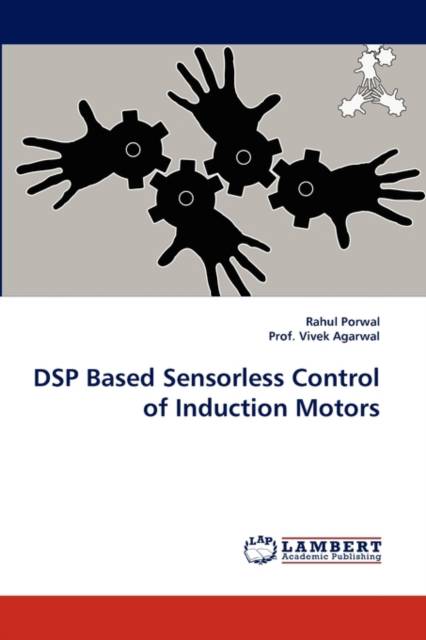
In case of induction motor, the independent control of flux and torque is achieved by resolving the motor current into two components, one contributing to flux and other to the torque. Here Rotor flux oriented vector control is presented and the implementation results are shown. To implement rotor flux oriented control, information of rotor flux is required, which is calculated using rotor flux model through speed feedback. For sensorless control, the speed and flux are estimated with the help of open loop calculation of the motor equations. Implementation of the above control algorithm requires high speed sampling of measured currents, their processing and calculations. These calculations are done with the help of software using TMS320F2812 digital signal processor. The induction motor model is first developed and tested using different reference frames. The model is then simulated for rotor flux oriented vector control and then sensorless control.
Specificaties
Betrokkenen
- Auteur(s):
- Uitgeverij:
Inhoud
- Aantal bladzijden:
- 72
- Taal:
- Engels
Eigenschappen
- Productcode (EAN):
- 9783838385990
- Verschijningsdatum:
- 19/07/2010
- Uitvoering:
- Paperback
- Afmetingen:
- 150 mm x 220 mm
- Gewicht:
- 113 g


Alleen bij Standaard Boekhandel
+ 96 punten op je klantenkaart van Standaard Boekhandel
Cadeau

AANGERADEN


Beoordelingen
We publiceren alleen reviews die voldoen aan de voorwaarden voor reviews. Bekijk onze voorwaarden voor reviews.