



Je cadeautjes zeker op tijd in huis hebben voor de feestdagen? Kom langs in onze winkels en vind het perfecte geschenk!
- Afhalen na 1 uur in een winkel met voorraad
- Gratis thuislevering in België vanaf € 30
- Ruim aanbod met 7 miljoen producten
Je cadeautjes zeker op tijd in huis hebben voor de feestdagen? Kom langs in onze winkels en vind het perfecte geschenk!
- Afhalen na 1 uur in een winkel met voorraad
- Gratis thuislevering in België vanaf € 30
- Ruim aanbod met 7 miljoen producten





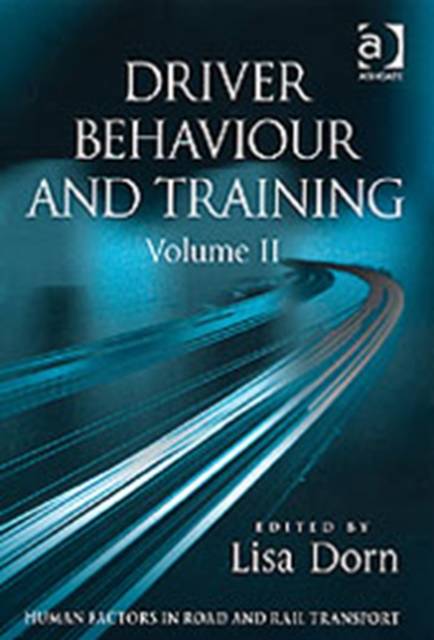
Driver Behaviour and Training: Volume 2
€ 274,95
+ 549 punten
Omschrijving
Research on driver behaviour over the past two decades has clearly demonstrated that the goals and motivations a driver brings to the driving task are important determinants for driver behaviour. The importance of this work is underlined by statistics: WHO figures show that road accidents are predicted to be the number three cause of death and injury by 2020 (currently more than 20 million deaths and injuries p.a.). The objective of this second edition, and of the conference on which it is based, is to describe and discuss recent advances in the study of driving behaviour and driver training. It bridges the gap between practitioners in road safety, and theoreticians investigating driving behaviour, from a number of different perspectives and related disciplines. A major focus is to consider how driver training needs to be adapted, to take into account driver characteristics, goals and motivations, in order to raise awareness of how these may contribute to unsafe driving behaviour, and to go on to promote the development of driver training courses that considers all the skills that are essential for road safety. As well as setting out new approaches to driver training methodology based on many years of empirical research on driver behaviour, the contributing road safety researchers and professionals consider the impact of human factors in the design of driver training as well as the traditional skills-based approach. Readership includes road safety researchers from a variety of different academic backgrounds, senior practitioners in the field of driver training from regulatory authorities and professional driver training organizations such as the police service, and private and public sector personnel who are concerned with improving road safety.
Specificaties
Betrokkenen
- Uitgeverij:
Inhoud
- Aantal bladzijden:
- 528
- Taal:
- Engels
- Reeks:
Eigenschappen
- Productcode (EAN):
- 9780754644309
- Verschijningsdatum:
- 27/10/2005
- Uitvoering:
- Hardcover
- Formaat:
- Genaaid
- Afmetingen:
- 156 mm x 234 mm
- Gewicht:
- 911 g


Alleen bij Standaard Boekhandel
+ 549 punten op je klantenkaart van Standaard Boekhandel
CADEAU


Beoordelingen
We publiceren alleen reviews die voldoen aan de voorwaarden voor reviews. Bekijk onze voorwaarden voor reviews.