


- Afhalen na 1 uur in een winkel met voorraad
- Gratis thuislevering in België vanaf € 30
- Ruim aanbod met 7 miljoen producten
- Afhalen na 1 uur in een winkel met voorraad
- Gratis thuislevering in België vanaf € 30
- Ruim aanbod met 7 miljoen producten





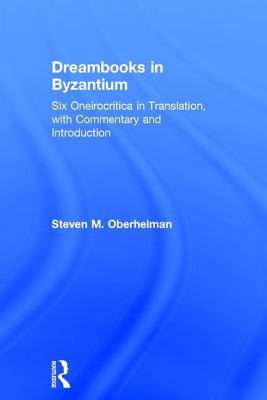
Dreambooks in Byzantium
Six Oneirocritica in Translation, with Commentary and Introduction
Steven M Oberhelman
Hardcover | Engels
€ 320,95
+ 641 punten
Omschrijving
Dreambooks in Byzantium offers for the first time in English translation and with commentary six of the seven extant Byzantine oneirocritica, or manuals on the interpretation of dreams. (The seventh, The Oneirocriticon of Achmet ibn Sereim was published previously by the author.) Dreams permeated all aspects of Byzantine culture, from religion to literature to everyday life, while the interpretation of the future through dreams was done by professionals (emperors had their own) or through oneirocritica. Dreambooks were written and attributed to famous patriarchs, biblical personages, and emperors, to fictitious writers and interpreters, or were copied and published anonymously. Two types of dreambooks were produced: short prose or verse manuals, with the dreams usually listed alphabetically by symbol; and long treatises with subject matter arranged according to topics and with elaborate dream theory. The manuals were meant for a popular audience, mainly readers of the middle and lower classes; their content deals with concerns like family, sickness and health, poverty and wealth, treachery by friends, fear of authorities, punishment and honor-concerns, in other words, that pertain to the individual dreamer, not to the state or a cult. The dreambook writers drew upon various sources in Classical and Islamic literature, oral and written Byzantine materials, and, perhaps, their own oneirocritic practices. Much of the source-material was pagan in origin and, therefore, needed to be reworked into a Christianized context, with many interpretations given a Christian coloring. For each dreambook the author provides a commentary focusing on analyses of the interpretations assigned to each dream-symbol; historical, social, and cultural discussions of the dreams and interpretations; linguistic, lexical, and grammatical issues; and cross-references with Achmet, Artemidorus, and the other Bzyantine dreambooks. There are also introductory chapters on Byzantine dream interpretation; the authors, their dates, and sources; the manuscripts of the dreambooks; and a lengthy discussion of the contribution of these dreambooks to psychohistory, cultural history, historical sociology, and gender studies. The book is unique in that it offers a full study, through translation and commentary, of the oneirocritica to a wide audience - Byzantinists, Arabists, cultural historians, medievalists (several of the Byzantine dreambooks were translated into Latin and became fundamental dream-texts throughout the Middle Ages), and psychohistorians, all of whom will find the book useful in their study of dreams, transmission of Arabic sources by Byzantine authors, and cultural anthropology. Together with the Oneirocriticon of Achmet, it offers a complete study of dream-interpretation in medieval Greece.
Specificaties
Betrokkenen
- Auteur(s):
- Uitgeverij:
Inhoud
- Aantal bladzijden:
- 260
- Taal:
- Engels
Eigenschappen
- Productcode (EAN):
- 9780754660842
- Verschijningsdatum:
- 10/09/2008
- Uitvoering:
- Hardcover
- Formaat:
- Genaaid
- Afmetingen:
- 156 mm x 234 mm
- Gewicht:
- 544 g


Alleen bij Standaard Boekhandel
+ 641 punten op je klantenkaart van Standaard Boekhandel
CADEAU


Beoordelingen
We publiceren alleen reviews die voldoen aan de voorwaarden voor reviews. Bekijk onze voorwaarden voor reviews.