


- Afhalen na 1 uur in een winkel met voorraad
- Gratis thuislevering in België vanaf € 30
- Ruim aanbod met 7 miljoen producten
- Afhalen na 1 uur in een winkel met voorraad
- Gratis thuislevering in België vanaf € 30
- Ruim aanbod met 7 miljoen producten





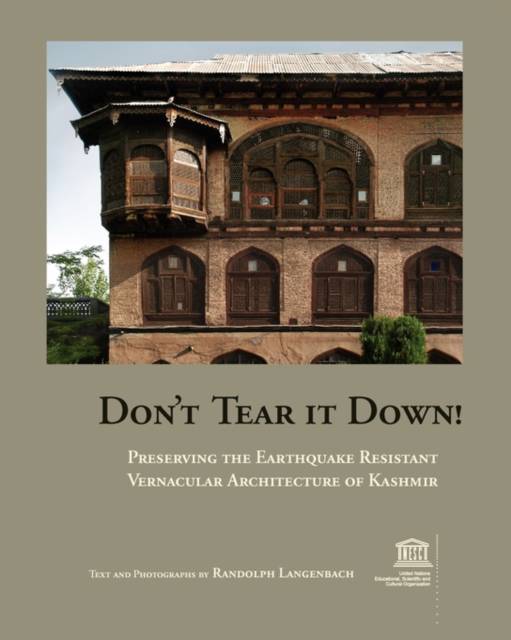
Don't Tear It Down! Preserving the Earthquake Resistant Vernacular Architecture of Kashmir
Randolph Langenbach
Paperback | Engels
€ 69,45
+ 138 punten
Omschrijving
DON'T TEAR IT DOWN! Preserving the Earthquake-Resistant Vernacular Architecture of Kashmir, makes the case for the preservation of the traditional domestic architecture that make up the urban form of Srinagar and the other cities in Kashmir. Published initially by UNESCO's New Delhi Office for distribution in Indian and Pakistan Administered Kashmir, the book is a product of UNESCO's mission to advance scientific understanding following the 2005 Kashmir earthquake which affected both Pakistan and India. The author, international heritage preservation consultant Randolph Langenbach, brings to it a vision of how the heritage buildings of Kashmir can become an armature on which to help rebuild people's pride of place after years of civil unrest. The work makes the case for preservation, not in spite of the antiquated construction of these buildings, but because of it. It is framed on the capacity of the best examples of Kashmiri traditional construction to resist one of Nature's most prodigious forces - earthquakes. By discussing two traditional forms of construction found in Kashmir: taq and dhajji dewari, this book documents an often ignored architectural heritage and a construction tradition that has demonstrated a level of earthquake-resistance that has led experts to introduce their attributes into the Indian and Pakistan building codes and to use features of them as the basis of ideas for how to improve the earthquake performance of modern structures of reinforced concrete.
Specificaties
Betrokkenen
- Auteur(s):
- Uitgeverij:
Inhoud
- Aantal bladzijden:
- 154
- Taal:
- Engels
Eigenschappen
- Productcode (EAN):
- 9780979680717
- Verschijningsdatum:
- 16/06/2009
- Uitvoering:
- Paperback
- Formaat:
- Trade paperback (VS)
- Afmetingen:
- 202 mm x 255 mm
- Gewicht:
- 439 g


Alleen bij Standaard Boekhandel
+ 138 punten op je klantenkaart van Standaard Boekhandel
Cadeau

AANGERADEN


Beoordelingen
We publiceren alleen reviews die voldoen aan de voorwaarden voor reviews. Bekijk onze voorwaarden voor reviews.