


- Afhalen na 1 uur in een winkel met voorraad
- Gratis thuislevering in België vanaf € 30
- Ruim aanbod met 7 miljoen producten
- Afhalen na 1 uur in een winkel met voorraad
- Gratis thuislevering in België vanaf € 30
- Ruim aanbod met 7 miljoen producten





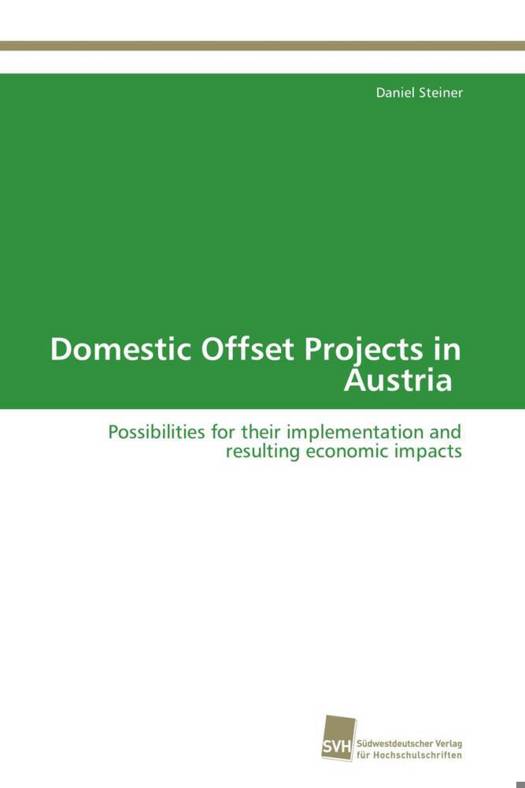
Domestic Offset Projects in Austria
Possibilities for their implementation and resulting economic impacts
Daniel Steiner
Paperback | Engels
€ 88,95
+ 177 punten
Omschrijving
Many countries face difficulties in achieving greenhouse gas (GHG) emission reductions through existing incentives and regulations, particularly in sectors not included in the European Emission Trading Scheme (EU ETS). Conflicting incentives as well as legal and financial obstacles contribute to these difficulties. Financial barriers include not only insufficient subsidies but also risk aversion, need for short amortization periods, costs of obtaining information, hurdles in obtaining loans and preferences to invest in product quality rather than energy efficiency. To support GHG abatement measures some countries have introduced so-called Domestic Offset Projects (DOPs). DOPs enable to support GHG abatement measures in facilities not covered by an ETS by private funds, thereby saving governmental funds. The entity providing financial support for an abatement measure receives certified CO2-emission reductions, which can be used in certain cases even for ETS-compliance. The study provides a comprehensive compendium of knowledge about DOPs. A variety of different design mechanisms for generating Domestic Offsets is analysed exemplarily for the case of Austria.
Specificaties
Betrokkenen
- Auteur(s):
- Uitgeverij:
Inhoud
- Aantal bladzijden:
- 236
- Taal:
- Engels
Eigenschappen
- Productcode (EAN):
- 9783838102580
- Verschijningsdatum:
- 7/12/2011
- Uitvoering:
- Paperback
- Afmetingen:
- 150 mm x 220 mm
- Gewicht:
- 330 g


Alleen bij Standaard Boekhandel
+ 177 punten op je klantenkaart van Standaard Boekhandel
Cadeau

AANGERADEN


Beoordelingen
We publiceren alleen reviews die voldoen aan de voorwaarden voor reviews. Bekijk onze voorwaarden voor reviews.