


- Afhalen na 1 uur in een winkel met voorraad
- Gratis thuislevering in België vanaf € 30
- Ruim aanbod met 7 miljoen producten
- Afhalen na 1 uur in een winkel met voorraad
- Gratis thuislevering in België vanaf € 30
- Ruim aanbod met 7 miljoen producten





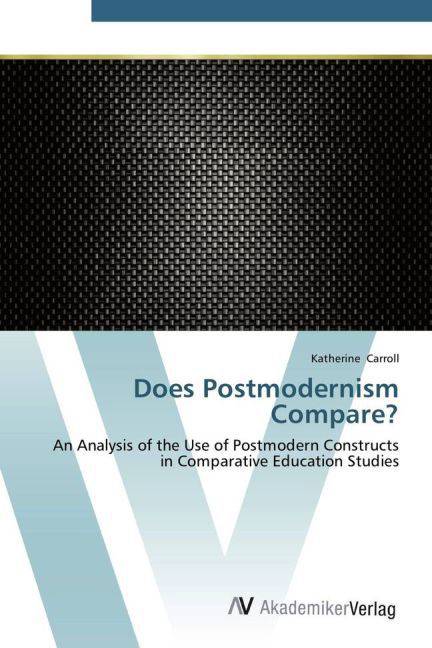
Does Postmodernism Compare?
An Analysis of the Use of Postmodern Constructs in Comparative Education Studies
Katherine Carroll
Paperback | Engels
€ 70,29
+ 140 punten
Omschrijving
Revision with unchanged content. Early scholars in comparative education sought to achieve verstehen, an internalized understanding, of the nature of education in a culture. They accessed German concepts, particularly Wilhelm Dilthey's, to interpret national studies to include the Triebkräfte, or forces, that made each nation's education system unique. Dilthey's inclusion of Johann von Herder's and Friedrich Schleiermacher's anti-rationalist ideas of intuitus and incommensurability was brought forward by Martin Heidegger, whose phenomenology incorporated these Idealist foundations. By the 1990s, some comparativists advocated for epistemologies and methodologies drawn from Heidegger and Michel Foucault, Jacques Derrida, and other postmodernists whose positioning was derived from Heidegger's thought. This book analyzes these theorists' foundational assumptions, exploring their use in epistemological and methodological approaches in recent studies in three major journals: Compare, Comparative Education, and Comparative Education Review. This examination of the conceptual influence Idealist and postmodern premises have had will benefit professionals in all areas of the fields of education and philosophy.
Specificaties
Betrokkenen
- Auteur(s):
- Uitgeverij:
Inhoud
- Aantal bladzijden:
- 164
- Taal:
- Engels
Eigenschappen
- Productcode (EAN):
- 9783639432039
- Verschijningsdatum:
- 26/06/2012
- Uitvoering:
- Paperback
- Formaat:
- Trade paperback (VS)
- Afmetingen:
- 152 mm x 229 mm
- Gewicht:
- 249 g


Alleen bij Standaard Boekhandel
+ 140 punten op je klantenkaart van Standaard Boekhandel
CADEAU


Beoordelingen
We publiceren alleen reviews die voldoen aan de voorwaarden voor reviews. Bekijk onze voorwaarden voor reviews.