


- Afhalen na 1 uur in een winkel met voorraad
- Gratis thuislevering in België vanaf € 30
- Ruim aanbod met 7 miljoen producten
- Afhalen na 1 uur in een winkel met voorraad
- Gratis thuislevering in België vanaf € 30
- Ruim aanbod met 7 miljoen producten





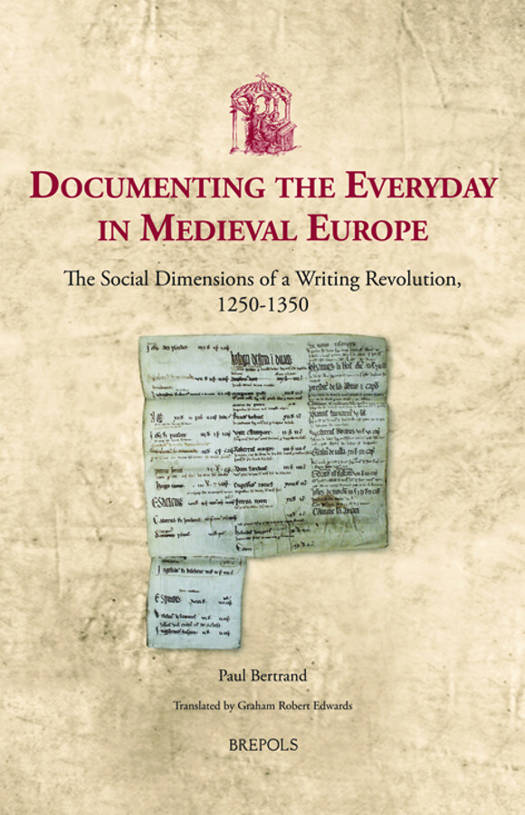
Documenting the Everyday in Medieval Europe
The Social Dimensions of a Writing Revolution, 1250-1350
Paul Bertrand
€ 137,80
+ 275 punten
Omschrijving
This book explores the complex relations between the written word and medieval society by focusing on the proliferation of administrative and business documents during the so-called 'long thirteenth century'. It deals with northern France and the area covered by the historic Low Countries, but places these regions in a broader European context and in the general history of literacy. Based on an exhaustive first-hand analysis of numerous archives and many document types, and featuring over a hundred illustrations, this book presents the reader with a large sample of documentary sources. But it also presents important hypotheses regarding literacy and the sociological dimensions of writing in the Middle Ages. Using codicology, palaeography, and diplomatics, it offers a general outline of a key period in the history of literacy which, with hindsight, can be shown to have transformed the Middle Ages. Further, as the documents that are discussed were used in everyday life, they also have a significant social dimension. At first, these documents were not backed by a clear legal authority; there were no extant rules, formulas, or structural frameworks to which they needed to conform. Thus they shed new light on the men and women who had to learn to make, keep, and use them.
Specificaties
Betrokkenen
- Auteur(s):
- Uitgeverij:
Inhoud
- Aantal bladzijden:
- 493
- Taal:
- Engels
- Reeks:
- Reeksnummer:
- nr. 42
Eigenschappen
- Productcode (EAN):
- 9782503579900
- Verschijningsdatum:
- 8/07/2019
- Uitvoering:
- Hardcover
- Formaat:
- Genaaid
- Afmetingen:
- 163 mm x 241 mm
- Gewicht:
- 997 g


Alleen bij Standaard Boekhandel
+ 275 punten op je klantenkaart van Standaard Boekhandel
Cadeau

AANGERADEN


Beoordelingen
We publiceren alleen reviews die voldoen aan de voorwaarden voor reviews. Bekijk onze voorwaarden voor reviews.