


- Afhalen na 1 uur in een winkel met voorraad
- Gratis thuislevering in België vanaf € 30
- Ruim aanbod met 7 miljoen producten
- Afhalen na 1 uur in een winkel met voorraad
- Gratis thuislevering in België vanaf € 30
- Ruim aanbod met 7 miljoen producten





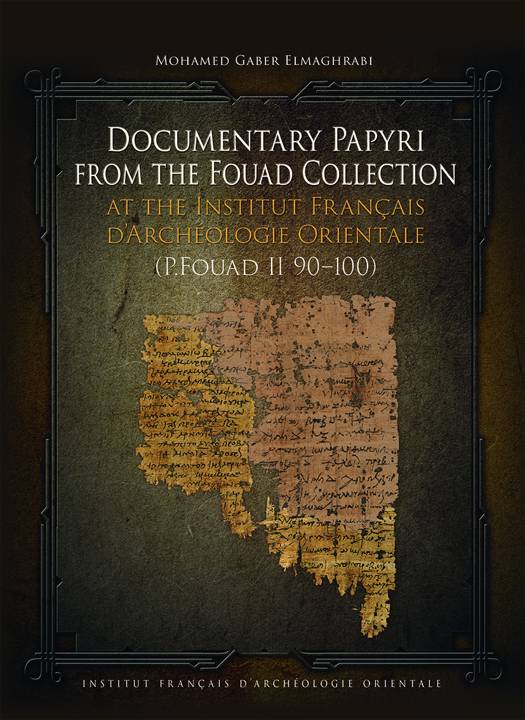
Documentary Papyri from the Fouad Collection at the Institut Francais d'Archeologie Orientale (P.Fouad II 90-100)
Mohamed Gaber El-Maghrabi
€ 22,00
+ 44 punten
Omschrijving
This book offers editions of eleven Greek documentary papyri from the Fouad Collection. The bulk of the collection was purchased in 1930 by King Fouad I of Egypt and donated to the Societe royale egyptienne de papyrologie (later known as Societe Fouad I de Papyrologie). The collection was augmented through further purchases or donations in the following years, and has been deposited at the IFAO since 1961. The introduction to this volume provides an outline of the origins and the acquisition history of the collection. In this volume, the edited papyri are a mixture of private and public documents (declarations, petitions, contracts, receipts, etc.) that mirror the everyday life of different strata of the society and the daily operations of the local provincial administration in Roman Egypt. These documents date from the early first century CE to the early third century CE, and originate from the Arsinoite, Oxyrhynchite and Lykopolite nomes. They are chronologically arranged and each one is presented with an introduction, its Greek transcription, a translation and commentary, and images. This book will be of interest to papyrologists and historians of Graeco-Roman Egypt.
Specificaties
Betrokkenen
- Auteur(s):
- Uitgeverij:
Inhoud
- Aantal bladzijden:
- 112
- Taal:
- Engels
- Reeks:
- Reeksnummer:
- nr. 186
Eigenschappen
- Productcode (EAN):
- 9782724710144
- Verschijningsdatum:
- 26/02/2024
- Uitvoering:
- Hardcover
- Formaat:
- Genaaid
- Afmetingen:
- 208 mm x 284 mm
- Gewicht:
- 680 g


Alleen bij Standaard Boekhandel
+ 44 punten op je klantenkaart van Standaard Boekhandel
Cadeau

AANGERADEN


Beoordelingen
We publiceren alleen reviews die voldoen aan de voorwaarden voor reviews. Bekijk onze voorwaarden voor reviews.