



Je cadeautjes zeker op tijd in huis hebben voor de feestdagen? Kom langs in onze winkels en vind het perfecte geschenk!
- Afhalen na 1 uur in een winkel met voorraad
- Gratis thuislevering in België vanaf € 30
- Ruim aanbod met 7 miljoen producten
Je cadeautjes zeker op tijd in huis hebben voor de feestdagen? Kom langs in onze winkels en vind het perfecte geschenk!
- Afhalen na 1 uur in een winkel met voorraad
- Gratis thuislevering in België vanaf € 30
- Ruim aanbod met 7 miljoen producten





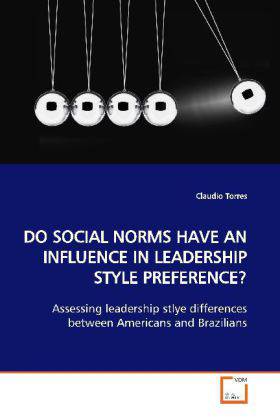
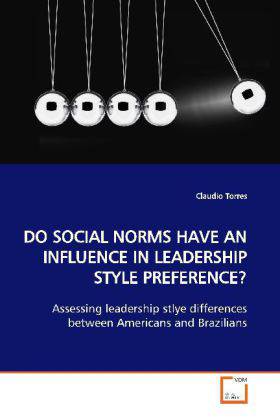
DO SOCIAL NORMS HAVE AN INFLUENCE IN LEADERSHIP STYLE PREFERENCE?
Assessing leadership stlye differences between Americans and Brazilians
Claudio Torres
Paperback | Engels
€ 110,45
+ 220 punten
Omschrijving
What impact do cultural differences have on the
relationship between leaders and subordinates? This
book addresses this question by investigating
differences between Americans and Brazilians on
cultural values and leadership style norms. Scholars
have been investigating the suitability of American
leadership theories and leadership styles across
cultures. The social norm is also a component of
culture to be investigated whenever national
cultures are discussed. It was observed that
Brazilians would prefer less participative
leadership behaviors than Americans. A participative
style of leadership, often recommended by American
management scholars, may trigger antagonistic
feelings in Brazilians. Because many Brazilians
expect inequality of power and social status, they
may perceive a participative leadership style as an
indication that the leader is not following the
expected role and so is not an optimal leader.
Leadership styles will most likely be effective for
the organization when the leader s style matches
subordinates expectations of what is an ideal
leader.
relationship between leaders and subordinates? This
book addresses this question by investigating
differences between Americans and Brazilians on
cultural values and leadership style norms. Scholars
have been investigating the suitability of American
leadership theories and leadership styles across
cultures. The social norm is also a component of
culture to be investigated whenever national
cultures are discussed. It was observed that
Brazilians would prefer less participative
leadership behaviors than Americans. A participative
style of leadership, often recommended by American
management scholars, may trigger antagonistic
feelings in Brazilians. Because many Brazilians
expect inequality of power and social status, they
may perceive a participative leadership style as an
indication that the leader is not following the
expected role and so is not an optimal leader.
Leadership styles will most likely be effective for
the organization when the leader s style matches
subordinates expectations of what is an ideal
leader.
Specificaties
Betrokkenen
- Auteur(s):
- Uitgeverij:
Inhoud
- Aantal bladzijden:
- 236
- Taal:
- Engels
Eigenschappen
- Productcode (EAN):
- 9783639175691
- Verschijningsdatum:
- 3/07/2009
- Uitvoering:
- Paperback
- Afmetingen:
- 152 mm x 220 mm
- Gewicht:
- 349 g


Alleen bij Standaard Boekhandel
+ 220 punten op je klantenkaart van Standaard Boekhandel
CADEAU


Beoordelingen
We publiceren alleen reviews die voldoen aan de voorwaarden voor reviews. Bekijk onze voorwaarden voor reviews.