


- Afhalen na 1 uur in een winkel met voorraad
- Gratis thuislevering in België vanaf € 30
- Ruim aanbod met 7 miljoen producten
- Afhalen na 1 uur in een winkel met voorraad
- Gratis thuislevering in België vanaf € 30
- Ruim aanbod met 7 miljoen producten





€ 217,95
+ 435 punten
Omschrijving
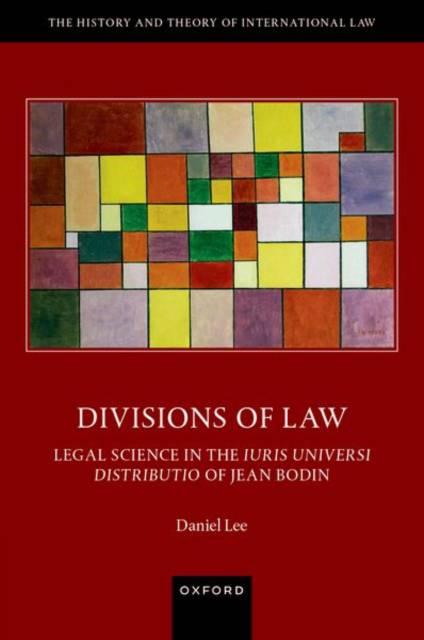
Legal science begins in the early modern effort to transform the academic study of classical Roman law into a systematic, rational discipline. In Divisions of Law, Daniel Lee investigates this transformation and focuses on the achievements of one major contributor to this effort, Jean Bodin (ca.1530-1596). The volume also includes the first English translation of Bodin's Iuris Universi Distributio, prepared by Jason Aaron Brown.
Remembered today for his work concerning the theory of state sovereignty, historical methodology, and religious toleration, Bodin was formally trained as a lawyer during a golden age of French jurisprudence. In that context, he authored a groundbreaking legal treatise, the Iuris Universi Distributio, that aspired to outline the essential elements of all legal systems in history. The author examines how early modern legal science broke away from the techniques of medieval jurisprudence, and how Bodin reorganized the whole of Roman law into a more orderly and rational system using the methods of Ramism, ultimately crafting a theory of justice modelled on the Pythagorean ideal of harmony. By studying Bodin's legal reasoning, Divisions of Law invites specialists in jurisprudence, legal history, and the history of political thought to understand how jurisprudence became a science.
Remembered today for his work concerning the theory of state sovereignty, historical methodology, and religious toleration, Bodin was formally trained as a lawyer during a golden age of French jurisprudence. In that context, he authored a groundbreaking legal treatise, the Iuris Universi Distributio, that aspired to outline the essential elements of all legal systems in history. The author examines how early modern legal science broke away from the techniques of medieval jurisprudence, and how Bodin reorganized the whole of Roman law into a more orderly and rational system using the methods of Ramism, ultimately crafting a theory of justice modelled on the Pythagorean ideal of harmony. By studying Bodin's legal reasoning, Divisions of Law invites specialists in jurisprudence, legal history, and the history of political thought to understand how jurisprudence became a science.
Specificaties
Betrokkenen
- Auteur(s):
- Uitgeverij:
Inhoud
- Aantal bladzijden:
- 206
- Taal:
- Engels
- Reeks:
Eigenschappen
- Productcode (EAN):
- 9780198810483
- Verschijningsdatum:
- 5/03/2026
- Uitvoering:
- Hardcover
- Formaat:
- Genaaid
- Afmetingen:
- 156 mm x 234 mm
- Gewicht:
- 467 g


Alleen bij Standaard Boekhandel
+ 435 punten op je klantenkaart van Standaard Boekhandel
Cadeau

AANGERADEN


Beoordelingen
We publiceren alleen reviews die voldoen aan de voorwaarden voor reviews. Bekijk onze voorwaarden voor reviews.