



Je cadeautjes zeker op tijd in huis hebben voor de feestdagen? Kom langs in onze winkels en vind het perfecte geschenk!
- Afhalen na 1 uur in een winkel met voorraad
- Gratis thuislevering in België vanaf € 30
- Ruim aanbod met 7 miljoen producten
Je cadeautjes zeker op tijd in huis hebben voor de feestdagen? Kom langs in onze winkels en vind het perfecte geschenk!
- Afhalen na 1 uur in een winkel met voorraad
- Gratis thuislevering in België vanaf € 30
- Ruim aanbod met 7 miljoen producten





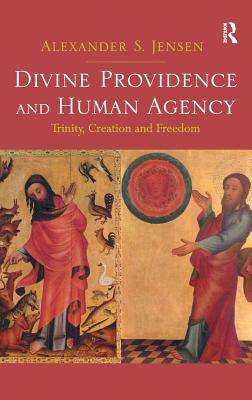
Divine Providence and Human Agency
Trinity, Creation and Freedom. by Alexander S. Jensen
Alexander S Jensen
Hardcover | Engels
€ 305,45
+ 610 punten
Uitvoering
Omschrijving
Divine Providence and Human Agency develops an understanding of God and God's relation to creation that perceives God as sovereign over creation while, at the same time, allowing for a meaningful notion of human freedom. This book provides a bridge between contemporary approaches that emphasise human freedom, such as process theology and those influenced by it, and traditional theologies that stress divine omnipotence.This book argues that it is essential for Christian theology to maintain that God is ultimately in charge of history: otherwise there would be no solid grounds for Christian hope. Yet, the modern human self-understanding as free agent within certain limitations must be taken seriously. Jensen approaches this apparent contradiction from within a consistently trinitarian framework. Jensen argues that a Christian understanding of God must be based on the experience of the saving presence of Christ in the Church, leading to an apophatic and consistently trinitarian theology. This serves as the framework for the discussion of divine omnipotence and human freedom. On the basis of the theological foundation established in this book, it is possible to frame the problem in a way that makes it possible to live within this tension. Building on this foundation, Jensen develops an understanding of history as the unfolding of the divine purpose and as an expression of God's very being, which is self-giving love and desire for communion. This book offers an important contribution to the debate of the doctrine of God in the context of an evolutionary universe.
Specificaties
Betrokkenen
- Auteur(s):
- Uitgeverij:
Inhoud
- Aantal bladzijden:
- 224
- Taal:
- Engels
Eigenschappen
- Productcode (EAN):
- 9781409435303
- Verschijningsdatum:
- 28/03/2014
- Uitvoering:
- Hardcover
- Formaat:
- Genaaid
- Afmetingen:
- 156 mm x 234 mm
- Gewicht:
- 494 g


Alleen bij Standaard Boekhandel
+ 610 punten op je klantenkaart van Standaard Boekhandel
CADEAU


Beoordelingen
We publiceren alleen reviews die voldoen aan de voorwaarden voor reviews. Bekijk onze voorwaarden voor reviews.