


- Afhalen na 1 uur in een winkel met voorraad
- Gratis thuislevering in België vanaf € 30
- Ruim aanbod met 7 miljoen producten
- Afhalen na 1 uur in een winkel met voorraad
- Gratis thuislevering in België vanaf € 30
- Ruim aanbod met 7 miljoen producten





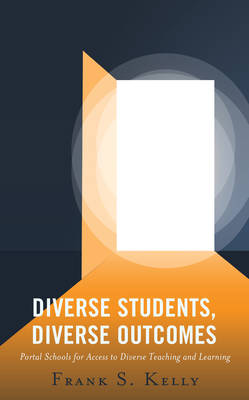
Diverse Students, Diverse Outcomes
Portal Schools for Access to Diverse Teaching and Learning
Frank S Kelly
Paperback | Engels
€ 64,45
+ 128 punten
Uitvoering
Omschrijving
In recent decades, the populations in major urban areas across the country have become increasingly diverse in terms of their ethnicities, languages, and economics, and within these evolving contexts many of our schools have struggled to produce good learning results for substantial numbers of their students. Our schools have tried to be fair to all they serve by using similar instructional methods, materials, and technology, and comparable schedules, facilities, and funding, but the outcomes realized for many students are seriously worrisome in terms of their abilities to succeed in our economy in the future. The Covid-19 pandemic further exacerbated this problem. Diverse Students, Diverse Outcomes: Portal Schools for Access to Diverse Teaching and Learning proposes ways to preserve our enormous staff and facility investments in order to provide schooling that will help different students learn in different ways and in the process make education much more attractive and engaging for all concerned--and thereby more economical. The concepts outlined are enriched by perspectives of other building types and supplemented with brief descriptions of twenty-eight schools created over the last fifty years that have been very successful--yet from which we seem to have learned little.
Specificaties
Betrokkenen
- Auteur(s):
- Uitgeverij:
Inhoud
- Aantal bladzijden:
- 134
- Taal:
- Engels
Eigenschappen
- Productcode (EAN):
- 9781475864717
- Verschijningsdatum:
- 15/07/2022
- Uitvoering:
- Paperback
- Formaat:
- Trade paperback (VS)
- Afmetingen:
- 152 mm x 229 mm
- Gewicht:
- 204 g


Alleen bij Standaard Boekhandel
+ 128 punten op je klantenkaart van Standaard Boekhandel
Cadeau

AANGERADEN


Beoordelingen
We publiceren alleen reviews die voldoen aan de voorwaarden voor reviews. Bekijk onze voorwaarden voor reviews.