


- Afhalen na 1 uur in een winkel met voorraad
- Gratis thuislevering in België vanaf € 30
- Ruim aanbod met 7 miljoen producten
- Afhalen na 1 uur in een winkel met voorraad
- Gratis thuislevering in België vanaf € 30
- Ruim aanbod met 7 miljoen producten





€ 57,95
+ 115 punten
Omschrijving
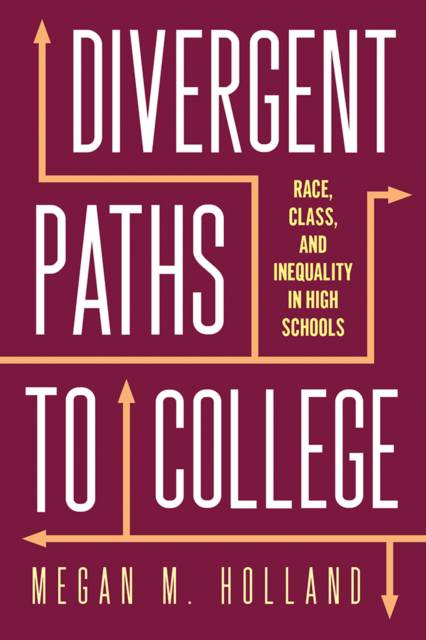
In Divergent Paths to College, Megan M. Holland examines how high schools structure different pathways that lead students to very different college destinations based on race and class. She finds that racial and class inequalities are reproduced through unequal access to key sources of information, even among students in the same school and even in schools with well-established college-going cultures. As the college application process becomes increasingly complex and high-stakes, social capital, or relationships with people who can provide information as well as support and guidance, becomes much more critical. Although much has been written about the college-bound experience, we know less about the role that social capital plays, and specifically how high schools can serve as organizational brokers of social ties. The relationships that high schools cultivate between students and higher education institutions by inviting college admissions officers into their schools to market to students, is a particularly critical, yet unexplored source of college information.
Specificaties
Betrokkenen
- Auteur(s):
- Uitgeverij:
Inhoud
- Aantal bladzijden:
- 216
- Taal:
- Engels
- Reeks:
Eigenschappen
- Productcode (EAN):
- 9780813590257
- Verschijningsdatum:
- 4/02/2019
- Uitvoering:
- Paperback
- Formaat:
- Trade paperback (VS)
- Afmetingen:
- 150 mm x 226 mm
- Gewicht:
- 294 g


Alleen bij Standaard Boekhandel
+ 115 punten op je klantenkaart van Standaard Boekhandel
Cadeau

AANGERADEN


Beoordelingen
We publiceren alleen reviews die voldoen aan de voorwaarden voor reviews. Bekijk onze voorwaarden voor reviews.