


- Afhalen na 1 uur in een winkel met voorraad
- Gratis thuislevering in België vanaf € 30
- Ruim aanbod met 7 miljoen producten
- Afhalen na 1 uur in een winkel met voorraad
- Gratis thuislevering in België vanaf € 30
- Ruim aanbod met 7 miljoen producten




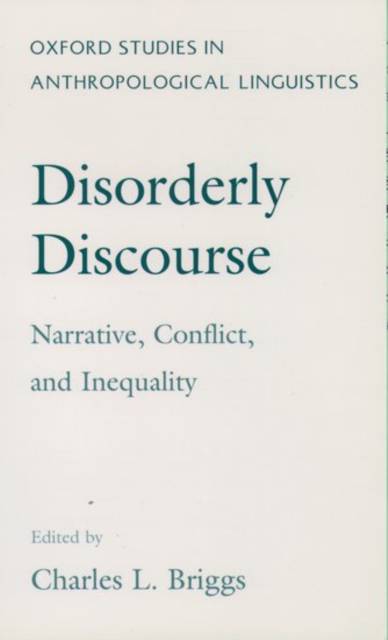
Disorderly Discourse
Narrative, Conflict, and Inequality
€ 407,45
+ 814 punten
Eenvoudig bestellen
Veilig betalen


Gratis thuislevering vanaf € 30 (via bpost)
Gratis levering in je Standaard Boekhandel
Omschrijving
Conflict plays a crucial role in social interactions, and representations of conflict are an important aspect of language. Stories and narratives involving everything from war to playground disputes generate, sustain, mediate, and represent conflict at all levels of social organization. Still, despite the vast amount of research on conflict and narrative in a number of disciplines, no one has yet examined how these play off of each other; in fact, most studies treat narrative merely as a source of information about conflict rather then as a part of conflict's process. The contributors to this collection argue that language consists of socially and politically situated practices that are differentially distributed on the basis of gender, class, race, ethnicity, and other categories. Each of them, writing from the perspective of their own disciplines, challenges previous assumptions about narrative and social conflict as they interpret a range of disputes that emerge in a variety of settings. Taken in total, these essays substantially further our theoretical and methodological understanding of narrative and conflict and how they intersect.
Specificaties
Betrokkenen
- Uitgeverij:
Inhoud
- Aantal bladzijden:
- 256
- Taal:
- Engels
- Reeks:
- Reeksnummer:
- nr. 7
Eigenschappen
- Productcode (EAN):
- 9780195087765
- Verschijningsdatum:
- 24/10/1996
- Uitvoering:
- Hardcover
- Formaat:
- Genaaid
- Afmetingen:
- 162 mm x 238 mm
- Gewicht:
- 598 g

Alleen bij Standaard Boekhandel
+ 814 punten op je klantenkaart van Standaard Boekhandel
CADEAU

AANGERADEN


Beoordelingen
We publiceren alleen reviews die voldoen aan de voorwaarden voor reviews. Bekijk onze voorwaarden voor reviews.