


- Afhalen na 1 uur in een winkel met voorraad
- Gratis thuislevering in België vanaf € 30
- Ruim aanbod met 7 miljoen producten
- Afhalen na 1 uur in een winkel met voorraad
- Gratis thuislevering in België vanaf € 30
- Ruim aanbod met 7 miljoen producten





€ 244,45
+ 488 punten
Omschrijving
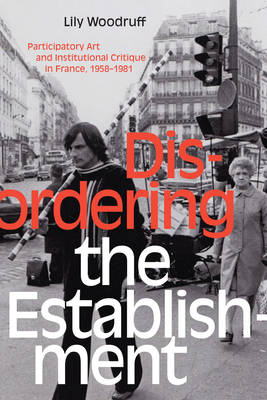
In the decades following World War II, France experienced both a period of affluence and a wave of political, artistic, and philosophical discontent that culminated in the countrywide protests of 1968. In Disordering the Establishment Lily Woodruff examines the development of artistic strategies of political resistance in France in this era. Drawing on interviews with artists, curators, and cultural figures of the time, Woodruff analyzes the formal and rhetorical methods that artists used to counter establishment ideology, appeal to direct political engagement, and grapple with French intellectuals' modeling of society. Artists and collectives such as Daniel Buren, André Cadere, the Groupe de Recherche d'Art Visuel, and the Collectif d'Art Sociologique shared an opposition to institutional hegemony by adapting their works to unconventional spaces and audiences, asserting artistic autonomy from art institutions, and embracing interdisciplinarity. In showing how these artists used art to question what art should be and where it should be seen, Woodruff demonstrates how artists challenged and redefined the art establishment and their historical moment.
Specificaties
Betrokkenen
- Auteur(s):
- Uitgeverij:
Inhoud
- Aantal bladzijden:
- 336
- Taal:
- Engels
- Reeks:
Eigenschappen
- Productcode (EAN):
- 9781478007920
- Verschijningsdatum:
- 12/06/2020
- Uitvoering:
- Hardcover
- Formaat:
- Genaaid
- Afmetingen:
- 157 mm x 234 mm
- Gewicht:
- 725 g


Alleen bij Standaard Boekhandel
+ 488 punten op je klantenkaart van Standaard Boekhandel
Cadeau

AANGERADEN


Beoordelingen
We publiceren alleen reviews die voldoen aan de voorwaarden voor reviews. Bekijk onze voorwaarden voor reviews.