


- Afhalen na 1 uur in een winkel met voorraad
- Gratis thuislevering in België vanaf € 30
- Ruim aanbod met 7 miljoen producten
- Afhalen na 1 uur in een winkel met voorraad
- Gratis thuislevering in België vanaf € 30
- Ruim aanbod met 7 miljoen producten





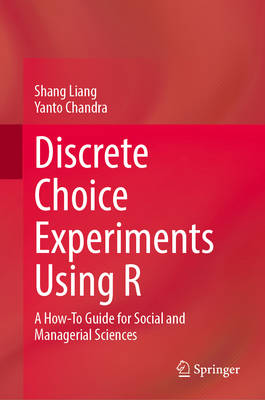
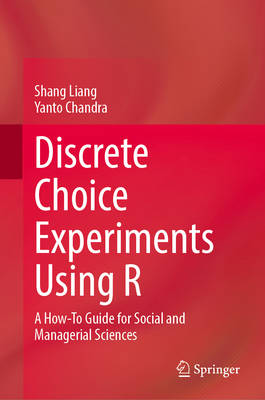
Discrete Choice Experiments Using R
A How-To Guide for Social and Managerial Sciences
Liang Shang, Yanto Chandra
Hardcover | Engels
€ 198,45
+ 396 punten
Omschrijving
This book delivers a user guide reference for researchers seeking to build their capabilities in conducting discrete choice experiment (DCE). The book is born out of the observation of the growing popularity - but lack of understanding - of the techniques to investigate preferences. It acknowledges that these broader decision-making processes are often difficult, or sometimes, impossible to study using conventional methods. While DCE is more mature in certain fields, it is relatively new in disciplines within social and managerial sciences. This text addresses these gaps as the first 'how-to' handbook that discusses the design and application of DCE methodology using R for social and managerial science research. Whereas existing books on DCE are either research monographs or largely focused on technical aspects, this book offers a step-by-step application of DCE in R, underpinned by a theoretical discussion on the strengths and weaknesses of the DCE approach, with supporting examples of best practices. Relevant to a broad spectrum of emerging and established researchers who are interested in experimental research techniques, particularly those that pertain to the measurements of preferences and decision-making, it is also useful to policymakers, government officials, and NGOs working in social scientific spaces.
Specificaties
Betrokkenen
- Auteur(s):
- Uitgeverij:
Inhoud
- Aantal bladzijden:
- 203
- Taal:
- Engels
Eigenschappen
- Productcode (EAN):
- 9789819945610
- Verschijningsdatum:
- 26/08/2023
- Uitvoering:
- Hardcover
- Formaat:
- Genaaid
- Afmetingen:
- 156 mm x 234 mm
- Gewicht:
- 485 g


Alleen bij Standaard Boekhandel
+ 396 punten op je klantenkaart van Standaard Boekhandel
Cadeau

AANGERADEN


Beoordelingen
We publiceren alleen reviews die voldoen aan de voorwaarden voor reviews. Bekijk onze voorwaarden voor reviews.