Standaard Boekhandel gebruikt cookies en gelijkaardige technologieën om de website goed te laten werken en je een betere surfervaring te bezorgen.
Hieronder kan je kiezen welke cookies je wilt inschakelen:
Technische en functionele cookies
Deze cookies zijn essentieel om de website goed te laten functioneren, en laten je toe om bijvoorbeeld in te loggen. Je kan deze cookies niet uitschakelen.
Analytische cookies
Deze cookies verzamelen anonieme informatie over het gebruik van onze website. Op die manier kunnen we de website beter afstemmen op de behoeften van de gebruikers.
Marketingcookies
Deze cookies delen je gedrag op onze website met externe partijen, zodat je op externe platformen relevantere advertenties van Standaard Boekhandel te zien krijgt.
Bedankt voor het vertrouwen het afgelopen jaar! Om jou te bedanken bieden we GRATIS verzending (in België) aan op alles gedurende de hele maand januari.
Afhalen na 1 uur in een winkel met voorraad
In januari gratis thuislevering in België
Ruim aanbod met 7 miljoen producten
Bedankt voor het vertrouwen het afgelopen jaar! Om jou te bedanken bieden we GRATIS verzending (in België) aan op alles gedurende de hele maand januari.
Je kan maximaal 250 producten tegelijk aan je winkelmandje toevoegen. Verwijdere enkele producten uit je winkelmandje, of splits je bestelling op in meerdere bestellingen.
In januari gratis thuislevering in België (via bpost)
Gratis levering in je Standaard Boekhandel
Omschrijving
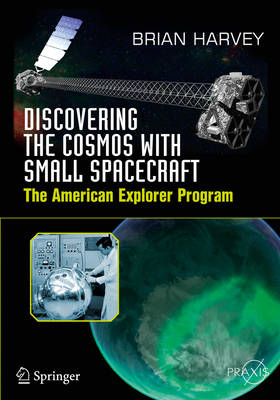
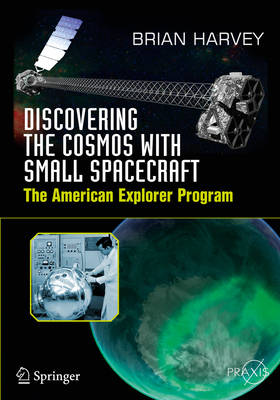
Explorer was the original American space program and Explorer 1 its first satellite, launched in 1958. Sixty years later, it is the longest continuously running space program in the world, demonstrating to the world how we can explore the cosmos with small spacecraft. Almost a hundred Explorers have already been launched.
Explorers have made some of the fundamental discoveries of the Space Age. Explorer 1 discovered Earth's radiation belts. Later Explorers surveyed the Sun, the X-ray and ultraviolet universes, black holes, magnetars and gamma ray bursts. An Explorer found the remnant of the Big Bang. One Explorer chased and was the first to intercept a comet.
The program went through a period of few launches during the crisis of funding for space science in the 1980s. However, with the era of 'faster, cheaper, better,' the program was reinvented, and new exiting missions began to take shape, like Swift and the asteroid hunter WISE.
Discovering the Cosmos with Small Spacecraft gives an account of each mission and its discoveries. It breaks down the program into its main periods of activity and examines the politics and debate on the role of small spacecraft in space science. It introduces the launchers (Juno, Thor, etc.), the launch centers, the ground centers and key personalities like James Van Allen who helped develop and run the spacecraft's exciting programs.