


- Afhalen na 1 uur in een winkel met voorraad
- Gratis thuislevering in België vanaf € 30
- Ruim aanbod met 7 miljoen producten
- Afhalen na 1 uur in een winkel met voorraad
- Gratis thuislevering in België vanaf € 30
- Ruim aanbod met 7 miljoen producten




€ 48,95
+ 97 punten
Eenvoudig bestellen
Veilig betalen


Gratis thuislevering vanaf € 30 (via bpost)
Gratis levering in je Standaard Boekhandel
Omschrijving
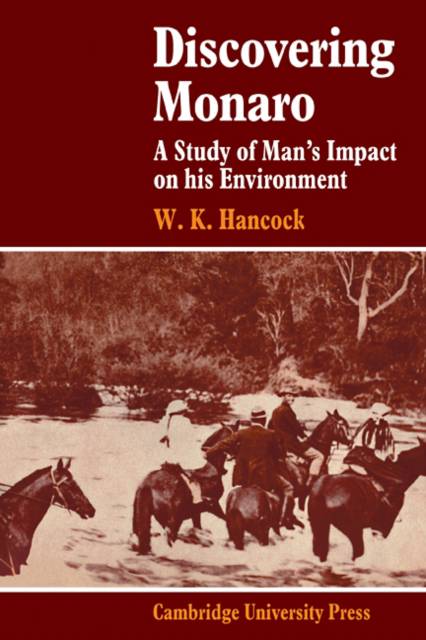
Discovering Monaro, a fascinating local history of an Australian region, is at the same time a contribution to the current debate on the environment and man's manipulation of it. Sir Keith Hancock examines critically the indictment, heralded by Plato in the Critias, that man is a creature who spoils his environment and in so doing spoils himself. He discovers in Monaro, as he did on the terraced hillsides of Tuscany forty years ago, a rhythm of spoiling, restoring and improving. Monaco, a region of nearly 6,000 square miles in Australia's south-eastern corner, is the main provider of water to the earth's driest continent. Sir Keith provides a detailed history of the land use of the area from palaeolithic times to the present day, thus explaining how boo generations of 'black' Australians and six generations of 'white' Australians have supported themselves on its grassy uplands and alpine water-sheds.
Specificaties
Betrokkenen
- Auteur(s):
- Uitgeverij:
Inhoud
- Aantal bladzijden:
- 232
- Taal:
- Engels
Eigenschappen
- Productcode (EAN):
- 9780521104937
- Verschijningsdatum:
- 19/03/2009
- Uitvoering:
- Paperback
- Formaat:
- Trade paperback (VS)
- Afmetingen:
- 152 mm x 229 mm
- Gewicht:
- 344 g


Alleen bij Standaard Boekhandel
+ 97 punten op je klantenkaart van Standaard Boekhandel
CADEAU

AANGERADEN


Beoordelingen
We publiceren alleen reviews die voldoen aan de voorwaarden voor reviews. Bekijk onze voorwaarden voor reviews.