


- Afhalen na 1 uur in een winkel met voorraad
- Gratis thuislevering in België vanaf € 30
- Ruim aanbod met 7 miljoen producten
- Afhalen na 1 uur in een winkel met voorraad
- Gratis thuislevering in België vanaf € 30
- Ruim aanbod met 7 miljoen producten





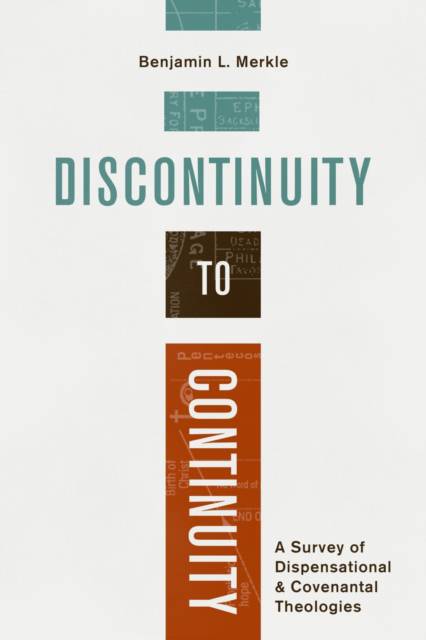
Discontinuity to Continuity
A Survey of Dispensational and Covenantal Theologies
Benjamin L Merkle
Paperback | Engels
€ 37,95
+ 75 punten
Omschrijving
What is the best framework for reading the Bible?
The question of how to relate the Old and New Testaments is as old as the Bible itself. While most Protestants are unified on the foundations, there are major disagreements on particular issues. Who should be baptized? Is the Christian obligated to obey the Law of Moses? Does the church supplant Israel? Who are the proper recipients of God's promises to Israel?
In Discontinuity to Continuity, Benjamin Merkle sheds light on the debates between dispensational and covenantal theological systems. Merkle identifies how Christians have attempted to relate the Testaments, placing viewpoints along a spectrum of discontinuity to continuity. Each system's concerns are sympathetically summarized and critically evaluated.
Through his careful exposition of these frameworks, Merkle helps the reader understand the key issues in the debate. Providing more light than heat, Merkle's book will help all its readers better appreciate other perspectives and articulate their own.
The question of how to relate the Old and New Testaments is as old as the Bible itself. While most Protestants are unified on the foundations, there are major disagreements on particular issues. Who should be baptized? Is the Christian obligated to obey the Law of Moses? Does the church supplant Israel? Who are the proper recipients of God's promises to Israel?
In Discontinuity to Continuity, Benjamin Merkle sheds light on the debates between dispensational and covenantal theological systems. Merkle identifies how Christians have attempted to relate the Testaments, placing viewpoints along a spectrum of discontinuity to continuity. Each system's concerns are sympathetically summarized and critically evaluated.
Through his careful exposition of these frameworks, Merkle helps the reader understand the key issues in the debate. Providing more light than heat, Merkle's book will help all its readers better appreciate other perspectives and articulate their own.
Specificaties
Betrokkenen
- Auteur(s):
- Uitgeverij:
Inhoud
- Aantal bladzijden:
- 248
- Taal:
- Engels
Eigenschappen
- Productcode (EAN):
- 9781683593874
- Verschijningsdatum:
- 3/06/2020
- Uitvoering:
- Paperback
- Formaat:
- Trade paperback (VS)
- Afmetingen:
- 150 mm x 226 mm
- Gewicht:
- 340 g



Alleen bij Standaard Boekhandel
+ 75 punten op je klantenkaart van Standaard Boekhandel
Cadeau

AANGERADEN


Beoordelingen
We publiceren alleen reviews die voldoen aan de voorwaarden voor reviews. Bekijk onze voorwaarden voor reviews.