


- Afhalen na 1 uur in een winkel met voorraad
- Gratis thuislevering in België vanaf € 30
- Ruim aanbod met 7 miljoen producten
- Afhalen na 1 uur in een winkel met voorraad
- Gratis thuislevering in België vanaf € 30
- Ruim aanbod met 7 miljoen producten





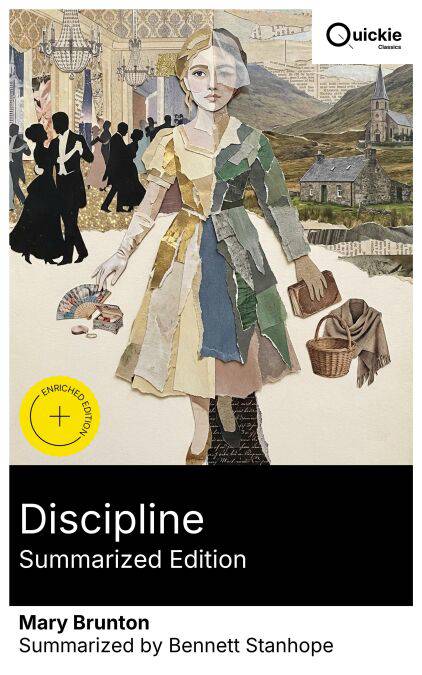
Discipline (Summarized Edition) E-BOOK
Enriched edition. Scottish moral fiction of romantic duty, a woman's conflicts, and societal expectations in 19th‑century Britain
Mary Brunton
E-book | Engels
€ 1,99
+ 1 punten
Omschrijving
First published in 1814, Discipline traces the rigorous moral education of a charming but vain heroine whose downfall begins with fashionable triumphs and proceeds through loss of fortune, social mortification, enforced labor, and even a harrowing interval of blindness. Cast between metropolitan salons and the Scottish Highlands, the novel's confessional first-person design fuses sentimental narrative with domestic realism and Evangelical instruction, testing the limits of sensibility, female accomplishment, and consumer display. Brunton's acute management of incident and interiority yields a narrative of providential trial that remains formally inventive and ethically searching. Mary Brunton (1778–1818), an Orkney-born Scottish minister's wife, wrote from within the culture of Evangelical reform and Scottish moral philosophy. The popular success of Self-Control (1811) emboldened her turn in Discipline to a more intimate anatomy of pride, repentance, and practical charity. Parish experience and Highland travel supplied the novel's rural economies and devotional scenes, while her husband, Alexander Brunton—Edinburgh clergyman and scholar—encouraged a project aimed at the improvement of female readers through narrative pleasure disciplined by principle. This is indispensable reading for students of Romantic-era women's fiction, the Anglo-Scottish novel, and religious culture, as well as admirers of Jane Austen and Hannah More. Its psychological candor, social satire, and deft plotting commend it to contemporary readers seeking an absorbing story that interrogates the entanglements of gender, economy, and faith.
Quickie Classics summarizes timeless works with precision, preserving the author's voice and keeping the prose clear, fast, and readable—distilled, never diluted. Enriched Edition extras: Introduction · Synopsis · Historical Context · Brief Analysis · 4 Reflection Q&As · Editorial Footnotes.
Quickie Classics summarizes timeless works with precision, preserving the author's voice and keeping the prose clear, fast, and readable—distilled, never diluted. Enriched Edition extras: Introduction · Synopsis · Historical Context · Brief Analysis · 4 Reflection Q&As · Editorial Footnotes.
Specificaties
Betrokkenen
- Auteur(s):
- Uitgeverij:
Inhoud
- Aantal bladzijden:
- 132
- Taal:
- Engels
Eigenschappen
- Productcode (EAN):
- 8596547883746
- Verschijningsdatum:
- 9/01/2026
- Uitvoering:
- E-book
- Beveiligd met:
- Digital watermarking
- Formaat:
- ePub


Alleen bij Standaard Boekhandel
+ 1 punten op je klantenkaart van Standaard Boekhandel
Cadeau

AANGERADEN


Beoordelingen
We publiceren alleen reviews die voldoen aan de voorwaarden voor reviews. Bekijk onze voorwaarden voor reviews.