


- Afhalen na 1 uur in een winkel met voorraad
- Gratis thuislevering in België vanaf € 30
- Ruim aanbod met 7 miljoen producten
- Afhalen na 1 uur in een winkel met voorraad
- Gratis thuislevering in België vanaf € 30
- Ruim aanbod met 7 miljoen producten





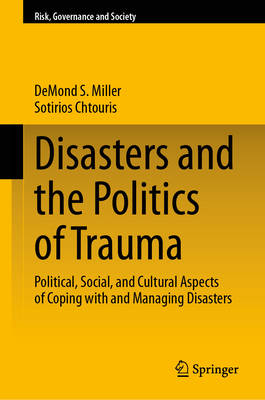
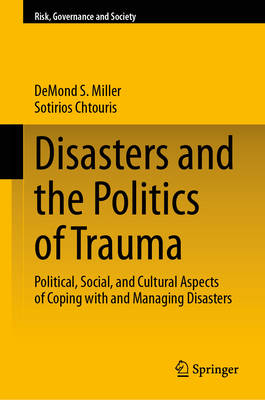
Disasters and the Politics of Trauma
Political, Social, and Cultural Aspects of Coping with and Managing Disasters
Demond S Miller, Sotirios Chtouris
€ 140,95
+ 281 punten
Omschrijving
This book examines the impact of disasters on individuals and communities, from natural calamities like wildfires and hurricanes, technological disasters, and human-induced crises. The authors present case studies from Greece and the United States, including recent events such as the national wildfires in Greece, railway disasters, hurricanes, and the 2025 wildfires in California. Through these case studies, the authors analyze the role of the political-administrative state in shaping the socio-political capital of its citizens. Operating at the interplay of politics, society, and culture in the aftermath of disasters, the book challenges traditional perspectives on disasters, asserting that they are inherently political incidents. It explores the enduring trauma experienced by individuals and communities, offering insights into the complex dynamics of power, uncertainty, and positionality. The book additionally discusses practical interventions, blending clinical sociological approaches to address personal and collective trauma. A timely and comprehensive exploration, this book allows for a better understanding of disasters as not merely events but critical political and social phenomena. It will therefore appeal to students, scholars, and researchers of sociology, political science, health sciences, and environmental sciences, as well as to policy-makers and practitioners.
Specificaties
Betrokkenen
- Auteur(s):
- Uitgeverij:
Inhoud
- Aantal bladzijden:
- 149
- Taal:
- Engels
- Reeks:
- Reeksnummer:
- nr. 23
Eigenschappen
- Productcode (EAN):
- 9783032190291
- Verschijningsdatum:
- 1/06/2026
- Uitvoering:
- Hardcover
- Formaat:
- Genaaid
- Afmetingen:
- 155 mm x 235 mm


Alleen bij Standaard Boekhandel
+ 281 punten op je klantenkaart van Standaard Boekhandel
Cadeau

AANGERADEN


Beoordelingen
We publiceren alleen reviews die voldoen aan de voorwaarden voor reviews. Bekijk onze voorwaarden voor reviews.