



Je cadeautjes zeker op tijd in huis hebben voor de feestdagen? Kom langs in onze winkels en vind het perfecte geschenk!
- Afhalen na 1 uur in een winkel met voorraad
- Gratis thuislevering in België vanaf € 30
- Ruim aanbod met 7 miljoen producten
Je cadeautjes zeker op tijd in huis hebben voor de feestdagen? Kom langs in onze winkels en vind het perfecte geschenk!
- Afhalen na 1 uur in een winkel met voorraad
- Gratis thuislevering in België vanaf € 30
- Ruim aanbod met 7 miljoen producten





€ 77,45
+ 154 punten
Omschrijving
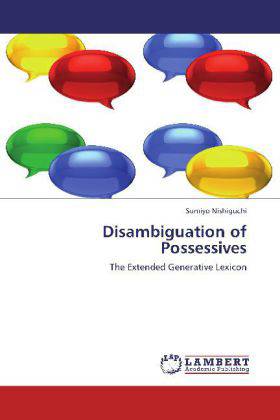
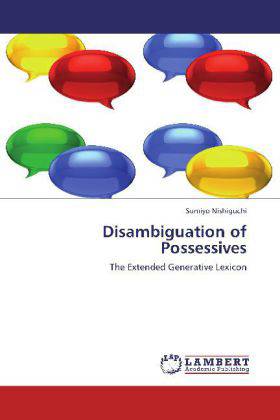
Possession is one of the basic concepts in human society, and there is hardly a language without possessive expressions. We start with the English possessive ``'s" and the preposition ``of," the Spanish and French ``de," the Chinese ``de" and the Japanese ``no." Possessive expressions are ambiguous. For example, ``Mary's book" can mean the book that Mary owns or the book that Mary wrote. The purpose of this book is to provide means for possessive disambiguation, and to enable the interpretation of the semantic relations between the possessor and the possessee. The Generative Lexicon Theory (GL), which has been considered to be a powerful tool for disambiguation of possessives, is found to be insufficient for Japanese possessives such as ``boshi-no hito" (the hat lady). Therefore, this book modifies GL and supplement lexical semantic information with another submodule. The Extended GL, what I call, provides means to predict the maximum possible kinds of relations between ``hat" and ``the lady."
Specificaties
Betrokkenen
- Auteur(s):
- Uitgeverij:
Inhoud
- Aantal bladzijden:
- 132
- Taal:
- Engels
Eigenschappen
- Productcode (EAN):
- 9783659304965
- Verschijningsdatum:
- 11/12/2012
- Uitvoering:
- Paperback
- Afmetingen:
- 150 mm x 220 mm
- Gewicht:
- 204 g


Alleen bij Standaard Boekhandel
+ 154 punten op je klantenkaart van Standaard Boekhandel
CADEAU


Beoordelingen
We publiceren alleen reviews die voldoen aan de voorwaarden voor reviews. Bekijk onze voorwaarden voor reviews.