


- Afhalen na 1 uur in een winkel met voorraad
- Gratis thuislevering in België vanaf € 30
- Ruim aanbod met 7 miljoen producten
- Afhalen na 1 uur in een winkel met voorraad
- Gratis thuislevering in België vanaf € 30
- Ruim aanbod met 7 miljoen producten





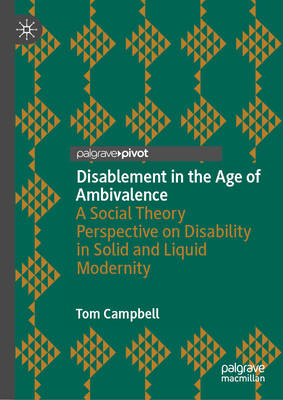
Disablement in the Age of Ambivalence
A Social Theory Perspective on Disability in Solid and Liquid Modernity
Tom Campbell
Hardcover | Engels
€ 43,45
+ 86 punten
Omschrijving
This book examines how disability is shaped by the transformation of modern society, using Zygmunt Bauman's concepts of solid modernity and liquid modernity to understand the changing forms of power, exclusion and moral indifference that disabled people face. Drawing on key debates in disability studies, it offers a new social theory of disablement that centres the lived consequences of order-making, surveillance, moral distancing and time. It positions disablement as essential to the study of society and argues for a future built on dignity, solidarity and the ethics of interdependence, one that leaves behind productivism and is grounded in care. An invaluable read for academics at all levels as well as students in disability studies, social theory, sociology, and related disciplines, this accessible monograph offers a new theoretical framework to reflect on the disablist character of society.
Specificaties
Betrokkenen
- Auteur(s):
- Uitgeverij:
Inhoud
- Aantal bladzijden:
- 151
- Taal:
- Engels
Eigenschappen
- Productcode (EAN):
- 9783032162489
- Verschijningsdatum:
- 11/03/2026
- Uitvoering:
- Hardcover
- Formaat:
- Genaaid
- Afmetingen:
- 158 mm x 217 mm
- Gewicht:
- 317 g


Alleen bij Standaard Boekhandel
+ 86 punten op je klantenkaart van Standaard Boekhandel
Cadeau

AANGERADEN


Beoordelingen
We publiceren alleen reviews die voldoen aan de voorwaarden voor reviews. Bekijk onze voorwaarden voor reviews.