


- Afhalen na 1 uur in een winkel met voorraad
- Gratis thuislevering in België vanaf € 30
- Ruim aanbod met 7 miljoen producten
- Afhalen na 1 uur in een winkel met voorraad
- Gratis thuislevering in België vanaf € 30
- Ruim aanbod met 7 miljoen producten





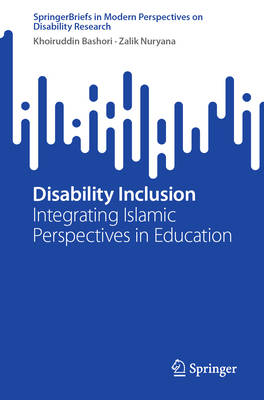
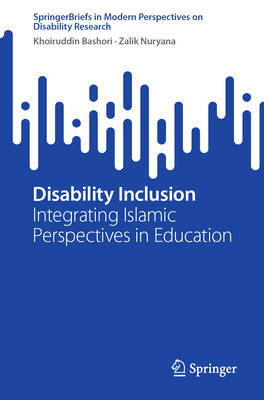
Disability Inclusion
Integrating Islamic Perspectives in Education
Khoiruddin Bashori, Zalik Nuryana
€ 74,45
+ 148 punten
Omschrijving
This book offers a timely and interdisciplinary exploration of disability inclusion through the lens of Islamic education. Drawing on core Islamic values such as rahmah (compassion), ʿadl (justice), and karāmah (dignity), it presents a faith-informed framework for inclusive pedagogy in Muslim-majority contexts. The authors integrate theological insights from the Qurʾān, Ḥadīth, and maqāṣid al-Sharīʿah with contemporary educational practices, highlighting how religious ethics can inform systemic change in schools, mosques, and communities. Structured around six thematic chapters, the book addresses stigma and attitudinal barriers, curriculum adaptation, assistive technology, Universal Design for Learning (UDL), and spiritual development of learners with disabilities. Case studies from Indonesia and other Muslim contexts provide practical illustrations of inclusive strategies in Islamic Religious Education (PAI). This book contributes to the growing literature on culturally responsive education by bridging disability studies with Islamic pedagogy. It will be of interest to scholars in education, religious studies, and disability inclusion, as well as policymakers and practitioners seeking contextually grounded models for reform. By offering actionable insights and ethical foundations, the book supports efforts to create equitable learning environments that honor both faith and diversity.
Specificaties
Betrokkenen
- Auteur(s):
- Uitgeverij:
Inhoud
- Aantal bladzijden:
- 74
- Taal:
- Engels
- Reeks:
Eigenschappen
- Productcode (EAN):
- 9789819589067
- Verschijningsdatum:
- 22/05/2026
- Uitvoering:
- Paperback
- Formaat:
- Trade paperback (VS)
- Afmetingen:
- 155 mm x 235 mm


Alleen bij Standaard Boekhandel
+ 148 punten op je klantenkaart van Standaard Boekhandel
AANGERADEN


Beoordelingen
We publiceren alleen reviews die voldoen aan de voorwaarden voor reviews. Bekijk onze voorwaarden voor reviews.