


- Afhalen na 1 uur in een winkel met voorraad
- Gratis thuislevering in België vanaf € 30
- Ruim aanbod met 7 miljoen producten
- Afhalen na 1 uur in een winkel met voorraad
- Gratis thuislevering in België vanaf € 30
- Ruim aanbod met 7 miljoen producten





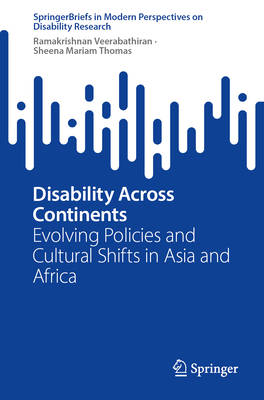
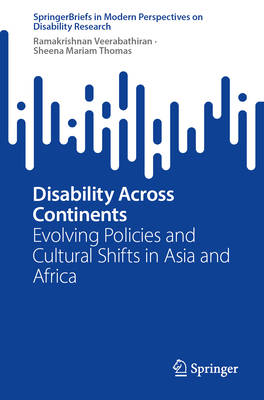
Disability Across Continents
Evolving Policies and Cultural Shifts in Asia and Africa
Ramakrishnan Veerabathiran, Sheena Mariam Thomas
€ 83,95
+ 167 punten
Omschrijving
This book offers a comprehensive exploration of the shifting landscape of disability rights and policies across two culturally rich and diverse continents. By adopting a multidisciplinary approach, the book integrates historical, cultural, socioeconomic, and technological perspectives on disability, providing readers with a broad understanding of the issues faced by disabled individuals in Asia and Africa. It examines the evolution of disability rights over time and the varying impacts of these changes on different communities. From traditional beliefs to modern societal structures, the book highlights how indigenous knowledge and local practices influence attitudes toward disability. A unique feature of the book is its focus on underexplored areas, such as the role of media in shaping disability narratives, the importance of sports in promoting social inclusion, and the rise of emerging technologies like AI and assistive devices in enhancing accessibility. By also focusing on grassroots movements, the growing influence of young advocates, and the need for sustainable future policies, the book not only reflects on past and present challenges but also offers forward-looking solutions. It serves as a vital resource for understanding how policy changes and cultural shifts can lead to more inclusive societies across Asia and Africa.
Specificaties
Betrokkenen
- Auteur(s):
- Uitgeverij:
Inhoud
- Aantal bladzijden:
- 115
- Taal:
- Engels
- Reeks:
Eigenschappen
- Productcode (EAN):
- 9789819660759
- Verschijningsdatum:
- 23/05/2025
- Uitvoering:
- Paperback
- Formaat:
- Trade paperback (VS)
- Afmetingen:
- 156 mm x 234 mm
- Gewicht:
- 208 g


Alleen bij Standaard Boekhandel
+ 167 punten op je klantenkaart van Standaard Boekhandel
Cadeau

AANGERADEN


Beoordelingen
We publiceren alleen reviews die voldoen aan de voorwaarden voor reviews. Bekijk onze voorwaarden voor reviews.