Standaard Boekhandel gebruikt cookies en gelijkaardige technologieën om de website goed te laten werken en je een betere surfervaring te bezorgen.
Hieronder kan je kiezen welke cookies je wilt inschakelen:
Technische en functionele cookies
Deze cookies zijn essentieel om de website goed te laten functioneren, en laten je toe om bijvoorbeeld in te loggen. Je kan deze cookies niet uitschakelen.
Analytische cookies
Deze cookies verzamelen anonieme informatie over het gebruik van onze website. Op die manier kunnen we de website beter afstemmen op de behoeften van de gebruikers.
Marketingcookies
Deze cookies delen je gedrag op onze website met externe partijen, zodat je op externe platformen relevantere advertenties van Standaard Boekhandel te zien krijgt.
Je cadeautjes zeker op tijd in huis hebben voor de feestdagen? Kom langs in onze winkels en vind het perfecte geschenk!
Afhalen na 1 uur in een winkel met voorraad
Gratis thuislevering in België vanaf € 30
Ruim aanbod met 7 miljoen producten
Je cadeautjes zeker op tijd in huis hebben voor de feestdagen? Kom langs in onze winkels en vind het perfecte geschenk!
Je kan maximaal 250 producten tegelijk aan je winkelmandje toevoegen. Verwijdere enkele producten uit je winkelmandje, of splits je bestelling op in meerdere bestellingen.
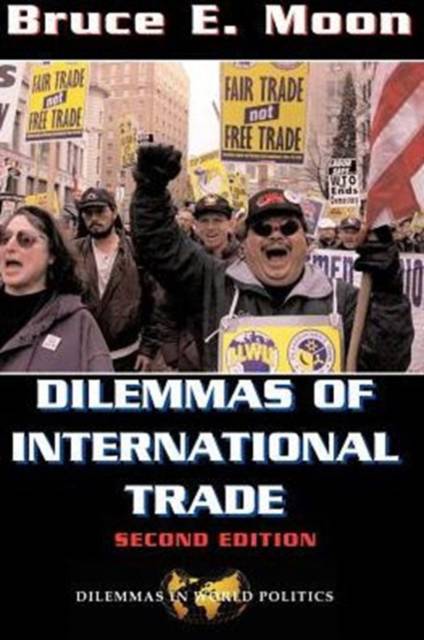
In the post-Cold War world, trade is the new arena for competition-between nations, between groups, between ethical and theoretical ideas. In this revised and updated second edition of Dilemmas of International Trade political economist Bruce Moon puts contemporary trade events--NAFTA, United States-Japan controversies, the Uruguay Round of GATT, China's Most Favored Nation status, the founding of the World Trade Organization--into historical and theoretical perspective with the British Corn Laws, the Great Depression, the Bretton Woods system, and the origins of the European Union. Economic theory, terms, and concepts are clearly explained and contextualized with those from international relations.Throughout the book, three central dilemmas are examined: the unequal distribution of income and wealth created by international trade, the tradeoff among competing values that trade requires, and the difficult interrelationship between economic and foreign policy goals within and among trading nations. Though internationally framed, each dilemma has ramifications at a variety of levels all the way down to the individual's role in the global economy-as a consumer, as a citizen, and ultimately as a moral agent.