


- Afhalen na 1 uur in een winkel met voorraad
- Gratis thuislevering in België vanaf € 30
- Ruim aanbod met 7 miljoen producten
- Afhalen na 1 uur in een winkel met voorraad
- Gratis thuislevering in België vanaf € 30
- Ruim aanbod met 7 miljoen producten





€ 152,95
+ 305 punten
Omschrijving
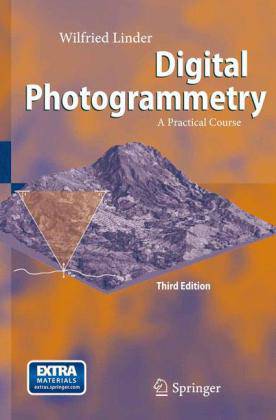
1.1 Basic idea and main task of photogrammetry If you want to measure the size of an object, let's say the length, width and height of a house, then normally you will carry this out directly at the object. Now imagine that the house didn't exist anymore - it was destroyed, but some historic photos exist. Then, if you can determine the scale of the photos, it must be pos- ble to get the desired data. Of course you can use photos to get information about objects. This kind of - formation is different: So, for example, you may receive qualitative data (the house seems to be old, the walls are coloured light yellow) from photo interpre- tion, or quantitative data like mentioned before (the house has a base size of 8 by 6 meters) from photo measurement, or information in addition to your background knowledge (the house has elements of the "art nouveau" style, so may be c- th structed at the beginning of the 20 century), and so on.
Specificaties
Betrokkenen
- Auteur(s):
- Uitgeverij:
Inhoud
- Aantal bladzijden:
- 220
- Taal:
- Engels
Eigenschappen
- Productcode (EAN):
- 9783540927242
- Uitvoering:
- Hardcover
- Afmetingen:
- 164 mm x 242 mm
- Gewicht:
- 512 g


Alleen bij Standaard Boekhandel
+ 305 punten op je klantenkaart van Standaard Boekhandel

Beoordelingen
We publiceren alleen reviews die voldoen aan de voorwaarden voor reviews. Bekijk onze voorwaarden voor reviews.