


- Afhalen na 1 uur in een winkel met voorraad
- Gratis thuislevering in België vanaf € 30
- Ruim aanbod met 7 miljoen producten
- Afhalen na 1 uur in een winkel met voorraad
- Gratis thuislevering in België vanaf € 30
- Ruim aanbod met 7 miljoen producten





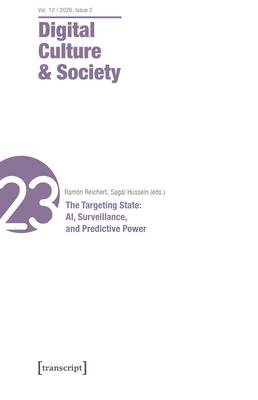
Digital Culture & Society (Dcs)
Vol. 12, Issue 2/2026 - The Targeting State: Ai, Surveillance, and Predictive Power
Ramón Reichert
€ 29,95
+ 59 punten
Uitvoering
Omschrijving
In migration enforcement regimes across the Global North, AI-driven systems are increasingly institutionalized as technical-media infrastructures. Cases like the Immigration and Customs Enforcement (ICE) in the U.S. exemplify the convergence of large-scale policing with advanced forms of automated data processing, machine learning, generative AI, and the strategic deployment of commercially sourced datasets. This issue examines the entanglement of artificial intelligence, surveillance infrastructures, and contemporary policing, bringing together interdisciplinary perspectives from critical AI studies, digital literacy, media archaeology, and political science. The contributors interrogate how algorithmic systems reconfigure the scale, scope, and operative logics of state power and conceptualize AI not merely as a tool of governance but as a constitutive element in the transformation of governmental rationalities, since AI-based policing systems are frequently trained on historically biased datasets, reproducing and intensifying racialized forms of discrimination and structural inequality. Hence, a central concern of the volume is the potential for critical interventions and media-political initiatives, exploring how practices such as counter-mapping and critical data activism might challenge or reconfigure these infrastructures of control.
Specificaties
Betrokkenen
- Auteur(s):
- Uitgeverij:
Inhoud
- Aantal bladzijden:
- 200
- Taal:
- Engels
- Reeks:
Eigenschappen
- Productcode (EAN):
- 9783837678550
- Verschijningsdatum:
- 27/11/2026
- Uitvoering:
- Paperback
- Formaat:
- Trade paperback (VS)
- Afmetingen:
- 155 mm x 240 mm


Alleen bij Standaard Boekhandel
+ 59 punten op je klantenkaart van Standaard Boekhandel
Cadeau

AANGERADEN


Beoordelingen
We publiceren alleen reviews die voldoen aan de voorwaarden voor reviews. Bekijk onze voorwaarden voor reviews.