


- Afhalen na 1 uur in een winkel met voorraad
- Gratis thuislevering in België vanaf € 30
- Ruim aanbod met 7 miljoen producten
- Afhalen na 1 uur in een winkel met voorraad
- Gratis thuislevering in België vanaf € 30
- Ruim aanbod met 7 miljoen producten





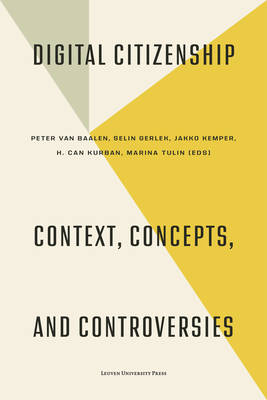
Digital Citizenship
Context, Concepts, and Controversies
Guda Van Noort, Tamar de Waal, Esther Weltevrede, Bidisha Chaudhuri, Paula Helm, Huub Dijstelbloem, Arad Ahi, Ans Kolk, Zahra Kashanizadeh, Henk Volberda, Marco L. Rapp, Myrto Pantazi, Joanna Strycharz, Hilde Voorveld, Mahsa Shabani, James Hazel, Lianne Hoek, Remmert Daas, Ot van Daalen, Elke H. Olthuis, Jaron Harambam, Isabel Benedict
Hardcover | Engels
€ 65,00
+ 130 punten
Omschrijving
The different dimensions and challenges of citizenship in the digital era.
Innovative and interdisciplinary handbook
For use in undergraduate and graduate classrooms
EU regulations and their implications for citizenship
Relevant for policymakers
In the digital age, citizenship is increasingly detached from traditional boundaries and reshaped by digital transformation. New practices, relationships, and forms of participation raise conceptual, empirical, and normative questions about what it means to be a citizen today. This handbook maps the many dimensions of digital citizenship, highlighting the challenges and tensions that shape its development and asking how links between the digital realm and the public sphere create new forms of citizenship.
Digital Citizenship: Context, Concepts, and Controversies provides an interdisciplinary examination of the nature and stakes of digital citizenship. Its chapters address rights, responsibilities, governance, and identity, and analyze how state-citizen relations evolve under digital transformation. Claims are illustrated with examples and case studies in areas such as education, healthcare, labor, international mobility sustainability, and democratic engagement. Covering topics such as eHealth, learning analytics, civic education, misinformation, and the digital divide, the book foregrounds EU regulations and their implications for citizenship. It serves international readers and blends theory with practical tools and examples suitable for undergraduate and graduate teaching, while also being relevant for policymakers.
Contributing authors: Peter van Baalen (University of Amsterdam), Jakko Kemper (University of Amsterdam), Marina Tulin (University of Amsterdam), Halil Can Kurban (University of Amsterdam), Guda van Noort (University of Amsterdam), Tamar de Waal (University of Amsterdam), Esther Weltevrede (University of Amsterdam), Bidisha Chaudhuri (University of Amsterdam), Paula Helm (University of Frankfurt), Huub Dijstelbloem (University of Amsterdam), Arad Ahi (University of Amsterdam), Ans Kolk (University of Amsterdam), Zahra Kashanizadeh (University of Amsterdam), Henk Volberda (University of Amsterdam), Marco L. Rapp (University of Amsterdam), Myrto Pantazi (University of Amsterdam), Joanna Strycharz (University of Amsterdam), Hilde Voorveld (University of Amsterdam), Mahsa Shabani (University of Amsterdam), James Hazel (University of Amsterdam), Lianne Hoek (University of Amsterdam), Remmert Daas (University of Amsterdam), Ot van Daalen (University of Amsterdam), Elke H. Olthuis (University of Amsterdam), Jaron Harambam (University of Amsterdam), Isabel Benedict (University of Amsterdam).
Specificaties
Betrokkenen
- Auteur(s):
- Uitgeverij:
Inhoud
- Aantal bladzijden:
- 370
- Taal:
- Engels
Eigenschappen
- Productcode (EAN):
- 9789462705319
- Verschijningsdatum:
- 15/12/2026
- Uitvoering:
- Hardcover
- Formaat:
- Genaaid
- Afmetingen:
- 155 mm x 233 mm
- Gewicht:
- 907 g


Alleen bij Standaard Boekhandel
+ 130 punten op je klantenkaart van Standaard Boekhandel
Cadeau

AANGERADEN


Beoordelingen
We publiceren alleen reviews die voldoen aan de voorwaarden voor reviews. Bekijk onze voorwaarden voor reviews.