


- Afhalen na 1 uur in een winkel met voorraad
- Gratis thuislevering in België vanaf € 30
- Ruim aanbod met 7 miljoen producten
- Afhalen na 1 uur in een winkel met voorraad
- Gratis thuislevering in België vanaf € 30
- Ruim aanbod met 7 miljoen producten





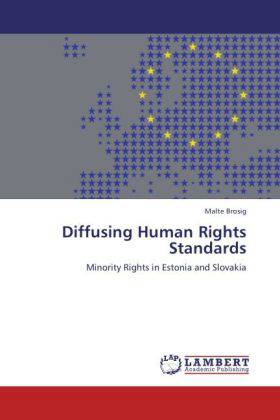
Diffusing Human Rights Standards
Minority Rights in Estonia and Slovakia
Malte Brosig
Paperback | Engels
€ 77,95
+ 155 punten
Omschrijving
This study examines the question of how European minority rights and non-discrimination standards have diffused from the international arena into Estonia and Slovakia. The main aim is to explore and compare the conditions for formal legal norm adoption with the conditions for norm implementation. This thesis starts with a critical analysis of the spiral and the external incentives models of norm diffusion. Based on the two models this thesis develops three diffusion dimensions the quality of norms, international organisations, and domestic level agents. Each dimension integrates rationalist and constructivist concepts of norm diffusion. It is argued that a theoretical synthesis of rationalist and constructivist approaches best accounts for the process of norm diffusion. Empirical data suggests that the legal adoption of minority rights norms was crucially influenced by EU conditionality and external incentives in combination with minority political participation, and international socialisation. However, the diffusion process was not completely successful. The empirical analysis reveals significant implementation deficits. Frequent racial discrimination towards Roma in Slovakia a
Specificaties
Betrokkenen
- Auteur(s):
- Uitgeverij:
Inhoud
- Aantal bladzijden:
- 272
- Taal:
- Engels
Eigenschappen
- Productcode (EAN):
- 9783846507629
- Verschijningsdatum:
- 24/02/2012
- Uitvoering:
- Paperback
- Afmetingen:
- 150 mm x 220 mm
- Gewicht:
- 424 g


Alleen bij Standaard Boekhandel
+ 155 punten op je klantenkaart van Standaard Boekhandel
Cadeau

AANGERADEN


Beoordelingen
We publiceren alleen reviews die voldoen aan de voorwaarden voor reviews. Bekijk onze voorwaarden voor reviews.