


- Afhalen na 1 uur in een winkel met voorraad
- Gratis thuislevering in België vanaf € 30
- Ruim aanbod met 7 miljoen producten
- Afhalen na 1 uur in een winkel met voorraad
- Gratis thuislevering in België vanaf € 30
- Ruim aanbod met 7 miljoen producten





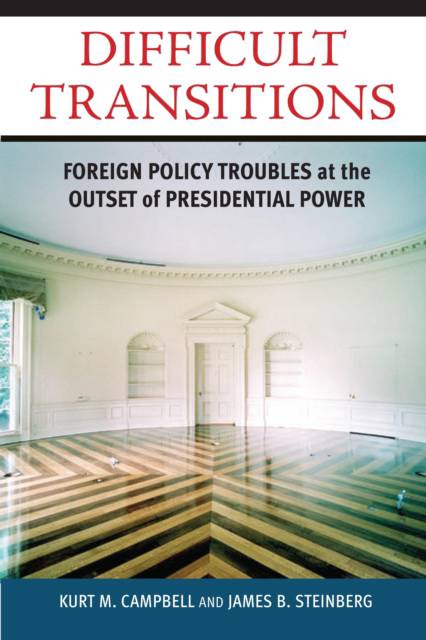
Difficult Transitions
Foreign Policy Troubles at the Outset of Presidential Power
Kurt M Campbell, James B Steinberg
Hardcover | Engels
€ 57,95
+ 115 punten
Omschrijving
New presidents have no honeymoon when it comes to foreign policy. Less than three months into his presidency, for example, John F. Kennedy authorized the disastrous effort to overthrow Fidel Castro at the Bay of Pigs. More recently, George W. Bush had been in office for less than eight months when he was faced with the attacks of September 11. How should an incoming president prepare for the foreign policy challenges that lie immediately ahead? That's the question Kurt Campbell and James Steinberg tackle in this compelling book. Drawing on their decades of government service--in the corridors of Capitol Hill, the intimate confines of the White House, the State Department, and the bare-knuckles Pentagon bureaucracy--Campbell and Steinberg identify the major foreign policy pitfalls that face a new presidential administration. They explain clearly and concisely what it takes to get foreign policy right from the start. The authors set the scene with a historical overview of presidential transitions and foreign policy including case studies of such prominent episodes as the ""Black Hawk Down"" tragedy in Somalia that shook the Clinton administration in its first year and the Bush administration's handling of the collision between a U.S. reconnaissance plane and a Chinese fighter jet in the spring of 2001. They pinpoint the leading causes of foreign policy fiascos, including the tendency to write off the policies of the outgoing administration and the failure to appreciate the differences between campaign promises and policy realities. Most important, they provide a road map to help the new administration steer clear of the land mines ahead. America's next president will confront critical foreign policy decisions from day one. Dif ficult Transitions provides essential guidance for getting those choices right.
Specificaties
Betrokkenen
- Auteur(s):
- Uitgeverij:
Inhoud
- Aantal bladzijden:
- 230
- Taal:
- Engels
Eigenschappen
- Productcode (EAN):
- 9780815713401
- Verschijningsdatum:
- 5/11/2008
- Uitvoering:
- Hardcover
- Formaat:
- Genaaid
- Afmetingen:
- 160 mm x 231 mm
- Gewicht:
- 498 g



Alleen bij Standaard Boekhandel
+ 115 punten op je klantenkaart van Standaard Boekhandel
Cadeau

AANGERADEN


Beoordelingen
We publiceren alleen reviews die voldoen aan de voorwaarden voor reviews. Bekijk onze voorwaarden voor reviews.