


- Afhalen na 1 uur in een winkel met voorraad
- Gratis thuislevering in België vanaf € 30
- Ruim aanbod met 7 miljoen producten
- Afhalen na 1 uur in een winkel met voorraad
- Gratis thuislevering in België vanaf € 30
- Ruim aanbod met 7 miljoen producten





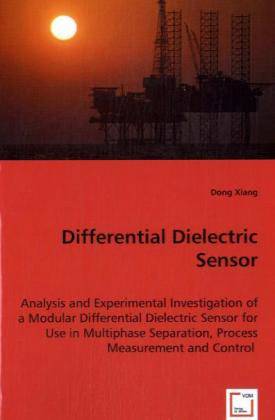
Differential Dielectric Sensor - Analysis and Experimental Investigation of a Modular Differential Dielectric Sensor for Use in Multiphase Separation, Process Measurement and Control
Analysis and Experimental Investigation of a Modular Differential Dielectric Sensor for Use in Multiphase Separation, Process Measurement and Control
Dong Xiang
Paperback | Engels
€ 77,95
+ 155 punten
Eenvoudig bestellen
Veilig betalen


Gratis thuislevering vanaf € 30 (via bpost)
Gratis levering in je Standaard Boekhandel
Omschrijving
In subsea processing systems, oil industry increasingly demands accurate and stable continuous measurement of the percent water in crude oil production streams (watercut) over the entire 0 to 100% range. Differential Dielectric Sensors (DDS) have been developed as independent tools connected with multiphase meters for process management and composition measurement. DDS is unique in its use of very low noise and high sensitivity differential measurements between two identical sensors and the use of physics based models for multiphase flow characterization. Existing watercut tools predominantly depend on empirical data and correlations that are sensitive to fluid properties and therefore are limited in their general applicability. The main objective of this work is to develop appropriate mathematical models for the sensor. Finite Element Analysis (FEA) and experimental investigations have been conducted to validate the sensor analytical models. This study provides the scientists and engineers a powerful tool for process management and control in the oil industry.
Specificaties
Betrokkenen
- Auteur(s):
- Uitgeverij:
Inhoud
- Aantal bladzijden:
- 216
- Taal:
- Engels
Eigenschappen
- Productcode (EAN):
- 9783836485814
- Verschijningsdatum:
- 15/04/2008
- Uitvoering:
- Paperback
- Formaat:
- Trade paperback (VS)
- Afmetingen:
- 152 mm x 229 mm
- Gewicht:
- 294 g


Alleen bij Standaard Boekhandel
+ 155 punten op je klantenkaart van Standaard Boekhandel
CADEAU

AANGERADEN


Beoordelingen
We publiceren alleen reviews die voldoen aan de voorwaarden voor reviews. Bekijk onze voorwaarden voor reviews.