


- Afhalen na 1 uur in een winkel met voorraad
- Gratis thuislevering in België vanaf € 30
- Ruim aanbod met 7 miljoen producten
- Afhalen na 1 uur in een winkel met voorraad
- Gratis thuislevering in België vanaf € 30
- Ruim aanbod met 7 miljoen producten





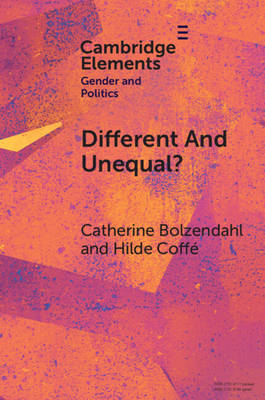
Different and Unequal?
Gendered Political Participation in European Democracies
Catherine Bolzendahl, Hilde Coffe
€ 33,45
+ 66 punten
Uitvoering
Omschrijving
This Element examines how gender shapes political participation across Europe, analyzing eight forms of political activity over 10 waves of the European Social Survey (2002-2020) in 26 democracies. Challenging the assumption that women participate less than men, we find evidence for gender differentiation: women vote, sign petitions, and boycott as much or more than men. Men dominate activities such as contacting politicians and party work. When political interest is accounted for, women demonstrate and post online at rates similar to men. Gender gaps remain stable over time, but national context matters: women in more gender-equal societies participate significantly more than those in less equal nations. By integrating individual resources, temporal trends, and cross-national variation, this book offers the most comprehensive analysis to date of gendered political participation in European democracies and its implications for equality and democratic engagement. This title is also available as Open Access on Cambridge Core.
Specificaties
Betrokkenen
- Auteur(s):
- Uitgeverij:
Inhoud
- Aantal bladzijden:
- 100
- Taal:
- Engels
- Reeks:
Eigenschappen
- Productcode (EAN):
- 9781009400053
- Verschijningsdatum:
- 02/04/2026
- Uitvoering:
- Paperback
- Formaat:
- Trade paperback (VS)
- Afmetingen:
- 152 mm x 229 mm
- Gewicht:
- 145 g


Alleen bij Standaard Boekhandel
+ 66 punten op je klantenkaart van Standaard Boekhandel
Cadeau

AANGERADEN


Beoordelingen
We publiceren alleen reviews die voldoen aan de voorwaarden voor reviews. Bekijk onze voorwaarden voor reviews.