


- Afhalen na 1 uur in een winkel met voorraad
- Gratis thuislevering in België vanaf € 30
- Ruim aanbod met 7 miljoen producten
- Afhalen na 1 uur in een winkel met voorraad
- Gratis thuislevering in België vanaf € 30
- Ruim aanbod met 7 miljoen producten





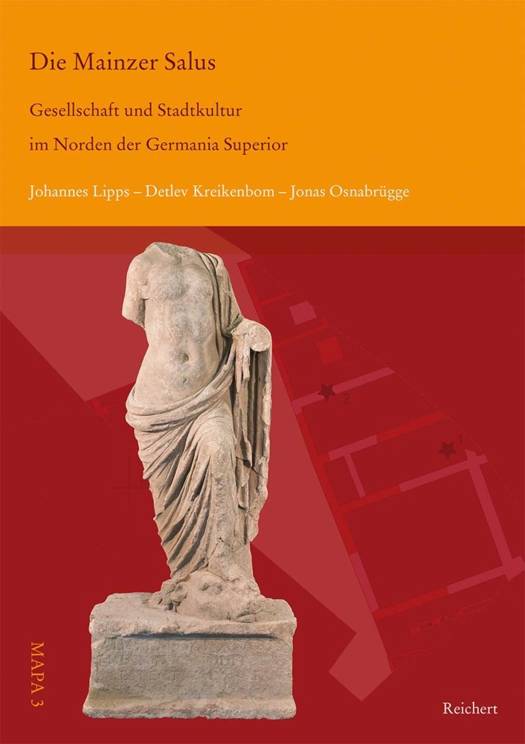
Die Mainzer Salus
Gesellschaft Und Stadtkultur Im Norden Der Germania Superior
Johannes Lipps, Detlev Kreikenbom, Jonas Osnabrügge
€ 26,45
+ 52 punten
Omschrijving
The volume at hand introduces a slightly less than life-size female figure with naked torso and hip cloak made of sandstone that was found in the "Zollhafen" of Mainz in October 2020. Her left foot rests on a bovine head, and a snake coils towards her left hand from her left shoulder. The inscription on the plinth identifies the figure as a "Salus", donated to the inhabitants of the Mainz canabae in 231 AD by Senecionius Moderatus and Respectius Constans. Together with a sculpture from Cologne, the Mainz Salus forms a statue scheme adapted to local needs, the origin of which we place in the Flavian period and hypothetically associate with a newly founded cult at that time. Furthermore, the statue's origins can be easily traced. The stone was probably quarried in the Nahe valley and imported to Mainz, where a workshop known to have distributed across the the province produced statues, presumably including the Genius from Nida (Heddernheim). With such products, the workshop catered to particularly ambitious clients, who adorned cities across Upper Germania with statues of various deities of salvation presented in public spaces, especially in the Severan period. Through this religious practice they both increased their own social prestige and contributed decisively to the urban added value of their communities. Finally, a second statue fragment found together with the Mainz Salus is presented and interpreted as Neptune.
Specificaties
Betrokkenen
- Auteur(s):
- Uitgeverij:
Inhoud
- Aantal bladzijden:
- 2024
- Taal:
- Duits
- Reeks:
Eigenschappen
- Productcode (EAN):
- 9783752007954
- Verschijningsdatum:
- 7/03/2024
- Uitvoering:
- Hardcover
- Formaat:
- Genaaid
- Afmetingen:
- 177 mm x 11 mm
- Gewicht:
- 10772 g


Alleen bij Standaard Boekhandel
+ 52 punten op je klantenkaart van Standaard Boekhandel
Cadeau

AANGERADEN


Beoordelingen
We publiceren alleen reviews die voldoen aan de voorwaarden voor reviews. Bekijk onze voorwaarden voor reviews.