


- Afhalen na 1 uur in een winkel met voorraad
- Gratis thuislevering in België vanaf € 30
- Ruim aanbod met 7 miljoen producten
- Afhalen na 1 uur in een winkel met voorraad
- Gratis thuislevering in België vanaf € 30
- Ruim aanbod met 7 miljoen producten





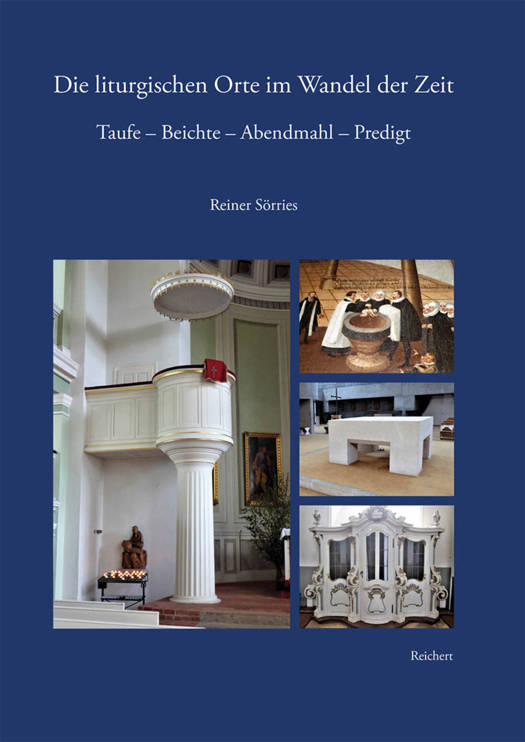
Die Liturgischen Orte Im Wandel Der Zeit
Taufe - Beichte - Abendmahl - Predigt
Reiner Sörries
Paperback | Duits
€ 51,95
+ 103 punten
Omschrijving
The development of the liturgical places in the church is told across time and denominations on 300 pages and with over three hundred pictures. Altar, pulpit, baptismal font and confessional are visible expressions of the Lord's Supper, sermon, baptism and confession. In the Protestant Church they are referred to as the four means of grace, in the Catholic Church there are four of the seven sacraments. If one looks at the liturgical places from antiquity to the present, they are not only subject to a formal change, but they also reflect the changes in the actions performed on them due to the history of theology. Among the objects cited as examples, many are named that have also found their way into art history, but also those that have not aroused the interest of art historians in simple village and country churches. But wherever they are to be found, they are testimonies of preaching and faith that have become form and image, sometimes highly complex, sometimes simple and popular. While examples in the area of the Roman Empire are used for the early Christian development, the selection concentrates on Central Europe and the German-speaking area as time progresses.
In this sense, the book is aimed at readers who are interested in an overview, be they clergy, because they work in these places or because they will work in them as students, be they church visitors who, for their part, want to be part of history what they see and marvel at often enough. It is at the same time a contribution to the iconography of Protestant and Catholic statements of faith, because the liturgical places themselves explain in words and pictures the faith that is proclaimed and carried out in them. At the same time, they give an insight into the execution of the liturgy in their respective time with contemporary images.
In this sense, the book is aimed at readers who are interested in an overview, be they clergy, because they work in these places or because they will work in them as students, be they church visitors who, for their part, want to be part of history what they see and marvel at often enough. It is at the same time a contribution to the iconography of Protestant and Catholic statements of faith, because the liturgical places themselves explain in words and pictures the faith that is proclaimed and carried out in them. At the same time, they give an insight into the execution of the liturgy in their respective time with contemporary images.
Specificaties
Betrokkenen
- Auteur(s):
- Uitgeverij:
Inhoud
- Aantal bladzijden:
- 320
- Taal:
- Duits
Eigenschappen
- Productcode (EAN):
- 9783954904532
- Verschijningsdatum:
- 17/08/2021
- Uitvoering:
- Paperback
- Formaat:
- Trade paperback (VS)
- Afmetingen:
- 174 mm x 20 mm
- Gewicht:
- 9198 g


Alleen bij Standaard Boekhandel
+ 103 punten op je klantenkaart van Standaard Boekhandel
Cadeau

AANGERADEN


Beoordelingen
We publiceren alleen reviews die voldoen aan de voorwaarden voor reviews. Bekijk onze voorwaarden voor reviews.