


- Afhalen na 1 uur in een winkel met voorraad
- Gratis thuislevering in België vanaf € 30
- Ruim aanbod met 7 miljoen producten
- Afhalen na 1 uur in een winkel met voorraad
- Gratis thuislevering in België vanaf € 30
- Ruim aanbod met 7 miljoen producten





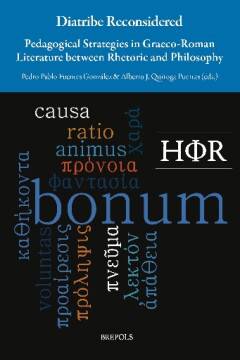
Diatribe Reconsidered
Pedagogical Strategies in Graeco-Roman Literature Between Rhetoric and Philosophy
Fuentes Gonz Lez Pedro Pablo
Paperback | Engels, Frans, Italiaans | Philosophie hellénistique et romaine / Hellenistic and Roman Philosophy | nr. 19
€ 95,40
+ 190 punten
Eenvoudig bestellen
Veilig betalen


Gratis thuislevering vanaf € 30 (via bpost)
Gratis levering in je Standaard Boekhandel
Omschrijving
In the study of the philosophical literature of Graeco-Roman antiquity, the 19th century scholarship coined an idea of diatribe that was problematic because of the highly artificial explanation of its genesis and because of its practical application. Diatribe ended up becoming a very confusing concept, based on the mere presence of certain themes or motifs linked to the so-called popular Cynic-Stoic philosophy, and of certain stylistic features associated with the obscure figure of Bion of Borysthenes. For this reason, the redefinition of the concept of diatribe in ancient literature in a clearer and more substantial manner has become a pressing concern in order to reconfigure it as a truly meaningful and useful exegetical tool. In line with S. K. Stowers (1981), this volume approaches a reconsidered diatribe from the general framework of modern communication theory, which characterises literary genres primarily by means of situational schemas and discursive strategies. The starting point is the clear linkage of the term diatribe in antiquity with a pedagogical context, be it real or fictional, marked by the theoretically beneficial relationship between a master and a disciple, both understood in a broad sense. This communicative and pragmatic diatribe, that explores the interactions between philosophy, rhetoric and pedagogy, can be traced at various levels of analysis, and its exploration is very interesting in the study of intellectual and religious debates throughout antiquity, as represented by various authors and texts of Greek philosophical literature from the 4th century B. C. to late antiquity.
Specificaties
Betrokkenen
- Auteur(s):
- Uitgeverij:
Inhoud
- Aantal bladzijden:
- 286
- Taal:
- Engels, Frans, Italiaans
- Reeks:
- Reeksnummer:
- nr. 19
Eigenschappen
- Productcode (EAN):
- 9782503619927
- Verschijningsdatum:
- 15/12/2025
- Uitvoering:
- Paperback
- Formaat:
- Trade paperback (VS)
- Afmetingen:
- 156 mm x 234 mm
- Gewicht:
- 984 g


Alleen bij Standaard Boekhandel
+ 190 punten op je klantenkaart van Standaard Boekhandel
CADEAU

AANGERADEN


Beoordelingen
We publiceren alleen reviews die voldoen aan de voorwaarden voor reviews. Bekijk onze voorwaarden voor reviews.