


- Afhalen na 1 uur in een winkel met voorraad
- Gratis thuislevering in België vanaf € 30
- Ruim aanbod met 7 miljoen producten
- Afhalen na 1 uur in een winkel met voorraad
- Gratis thuislevering in België vanaf € 30
- Ruim aanbod met 7 miljoen producten





Omschrijving
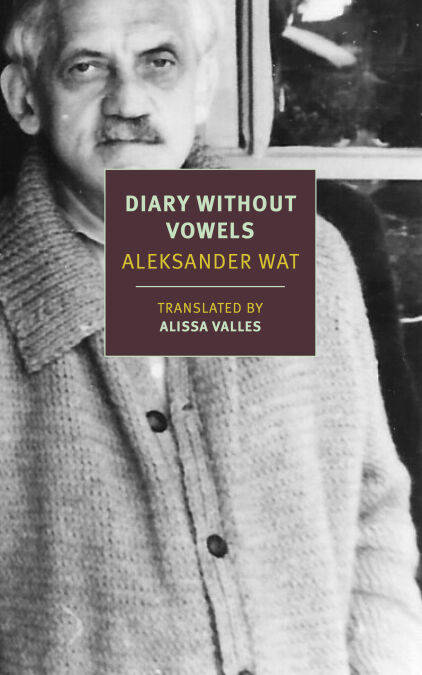
An intellectual and spiritual self-portrait by one of the most important Polish writers of the twentieth century, this companion to Aleksander Wat's memoir My Century is a moving testimony on pain and suffering and their relationship to thought and wisdom.
Aleksander Wat’s Diary Without Vowels is an enigmatic text found among the poet’s papers after his death, typed on loose leaf sheets, partly in code, and deciphered by his widow, Ola. Written in Paris and Berkeley, California, from October 1963 to May 1965—a period partially overlapping with the conversations with Czeslaw Milosz that led to Wat’s renowned memoir My Century—the diary charts Wat’s struggle with the pain and illness which plagued him in the post-war years, with the joys and difficulties of life in emigration. Lit by flashes of comedy and lyricism, it renders Wat’s stubborn fight to recover a sense of self from the storm of history and give a true shape to his fate as a poet and a man.
An indispensable companion to My Century, Diary Without Vowels is hailed by Wat’s biographer Tomas Venclova as “one of the most refined and intriguing examples of self-analysis in world literature.”
Aleksander Wat’s Diary Without Vowels is an enigmatic text found among the poet’s papers after his death, typed on loose leaf sheets, partly in code, and deciphered by his widow, Ola. Written in Paris and Berkeley, California, from October 1963 to May 1965—a period partially overlapping with the conversations with Czeslaw Milosz that led to Wat’s renowned memoir My Century—the diary charts Wat’s struggle with the pain and illness which plagued him in the post-war years, with the joys and difficulties of life in emigration. Lit by flashes of comedy and lyricism, it renders Wat’s stubborn fight to recover a sense of self from the storm of history and give a true shape to his fate as a poet and a man.
An indispensable companion to My Century, Diary Without Vowels is hailed by Wat’s biographer Tomas Venclova as “one of the most refined and intriguing examples of self-analysis in world literature.”
Specificaties
Betrokkenen
- Auteur(s):
- Vertaler(s):
- Uitgeverij:
Inhoud
- Aantal bladzijden:
- 272
- Taal:
- Engels
Eigenschappen
- Productcode (EAN):
- 9798896230809
- Verschijningsdatum:
- 9/11/2026
- Uitvoering:
- E-book
- Beveiligd met:
- Adobe DRM
- Formaat:
- ePub


Alleen bij Standaard Boekhandel
+ 18 punten op je klantenkaart van Standaard Boekhandel
Cadeau

AANGERADEN


Beoordelingen
We publiceren alleen reviews die voldoen aan de voorwaarden voor reviews. Bekijk onze voorwaarden voor reviews.