


- Afhalen na 1 uur in een winkel met voorraad
- Gratis thuislevering in België vanaf € 30
- Ruim aanbod met 7 miljoen producten
- Afhalen na 1 uur in een winkel met voorraad
- Gratis thuislevering in België vanaf € 30
- Ruim aanbod met 7 miljoen producten





Omschrijving
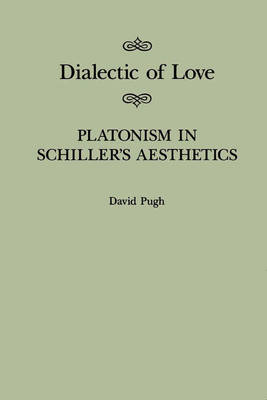
Dialectic of Love analyses the arguments of Schiller's major writings on aesthetics and argues that his philosophical thought, theories, and concepts are characteristic of the Platonic tradition. Schiller's conception of beauty is seen as synthesis, the sublime as separation. Pugh connects these concepts to Aristotle's critique of Plato's theory of ideas, in which Aristotle points out an aporia of chorismos (separation) and methexis (participation). In Schiller's thought, Pugh argues, beauty and the sublime operate primarily as metaphysical relations of methexis and chorismos and only secondarily as aesthetic concepts. While Schiller, Pugh reveals, is not very well suited for the role of champion of the Enlightenment, he remains a crucial figure in the transmission of the Platonic tradition to modern idealism and in the application of the Platonic metaphysical heritage to nineteenth-century aesthetics.
Specificaties
Betrokkenen
- Auteur(s):
- Uitgeverij:
Inhoud
- Aantal bladzijden:
- 456
- Taal:
- Engels
- Reeks:
- Reeksnummer:
- nr. 22
Eigenschappen
- Productcode (EAN):
- 9780773510203
- Verschijningsdatum:
- 5/03/1997
- Uitvoering:
- Hardcover
- Formaat:
- Genaaid
- Afmetingen:
- 152 mm x 229 mm
- Gewicht:
- 799 g


Alleen bij Standaard Boekhandel
+ 344 punten op je klantenkaart van Standaard Boekhandel
AANGERADEN


Beoordelingen
We publiceren alleen reviews die voldoen aan de voorwaarden voor reviews. Bekijk onze voorwaarden voor reviews.